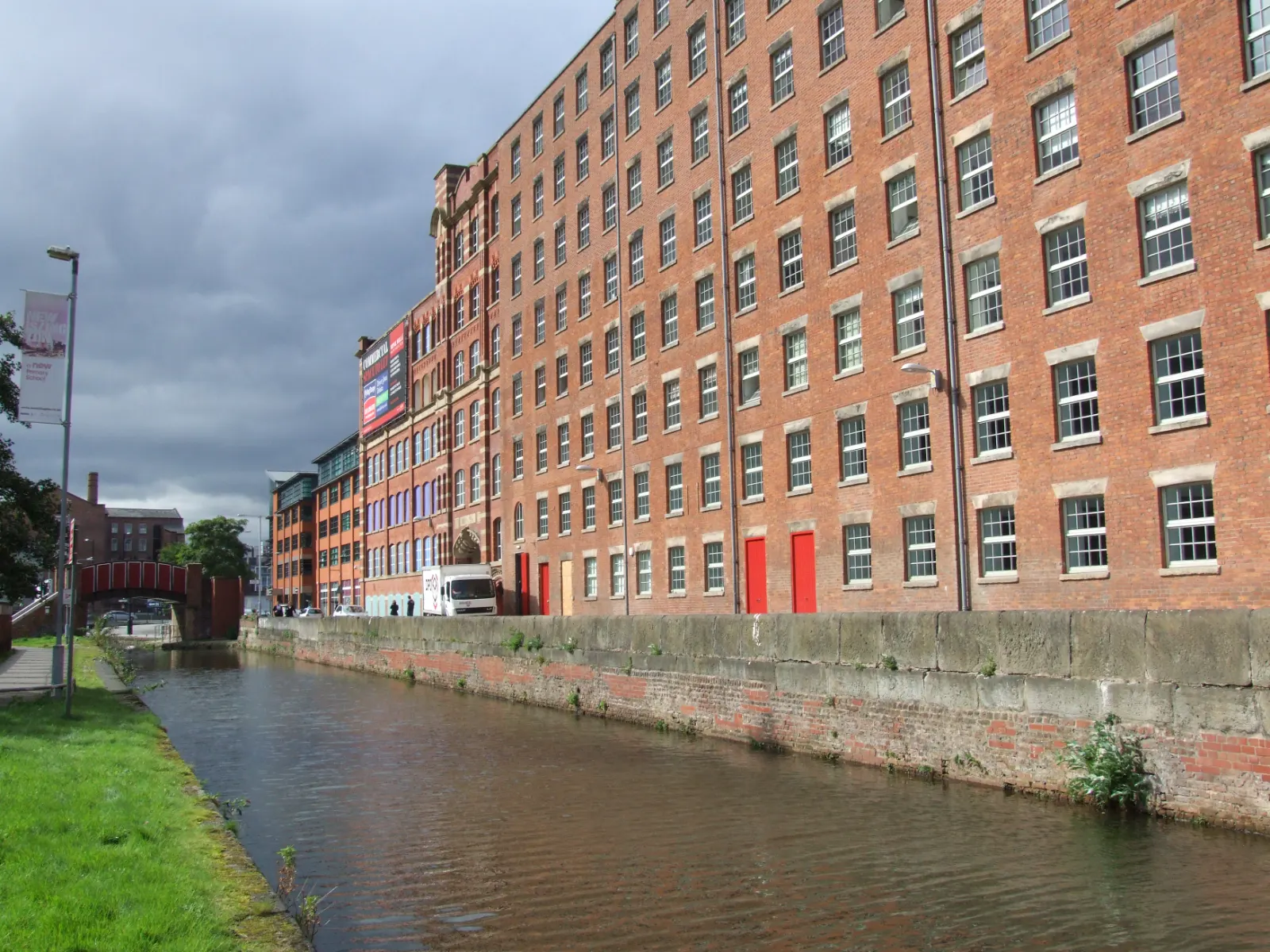
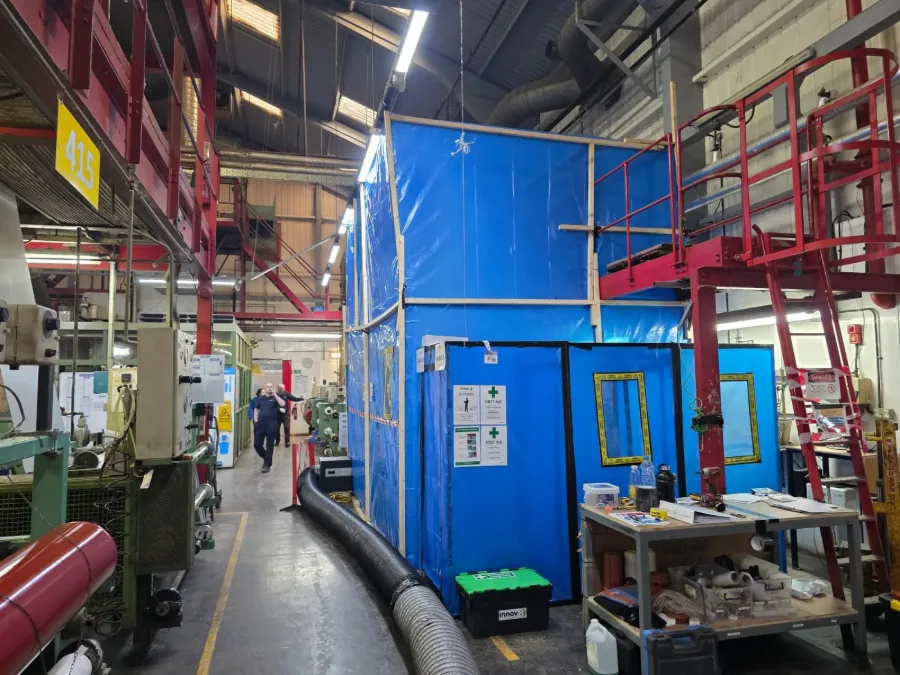
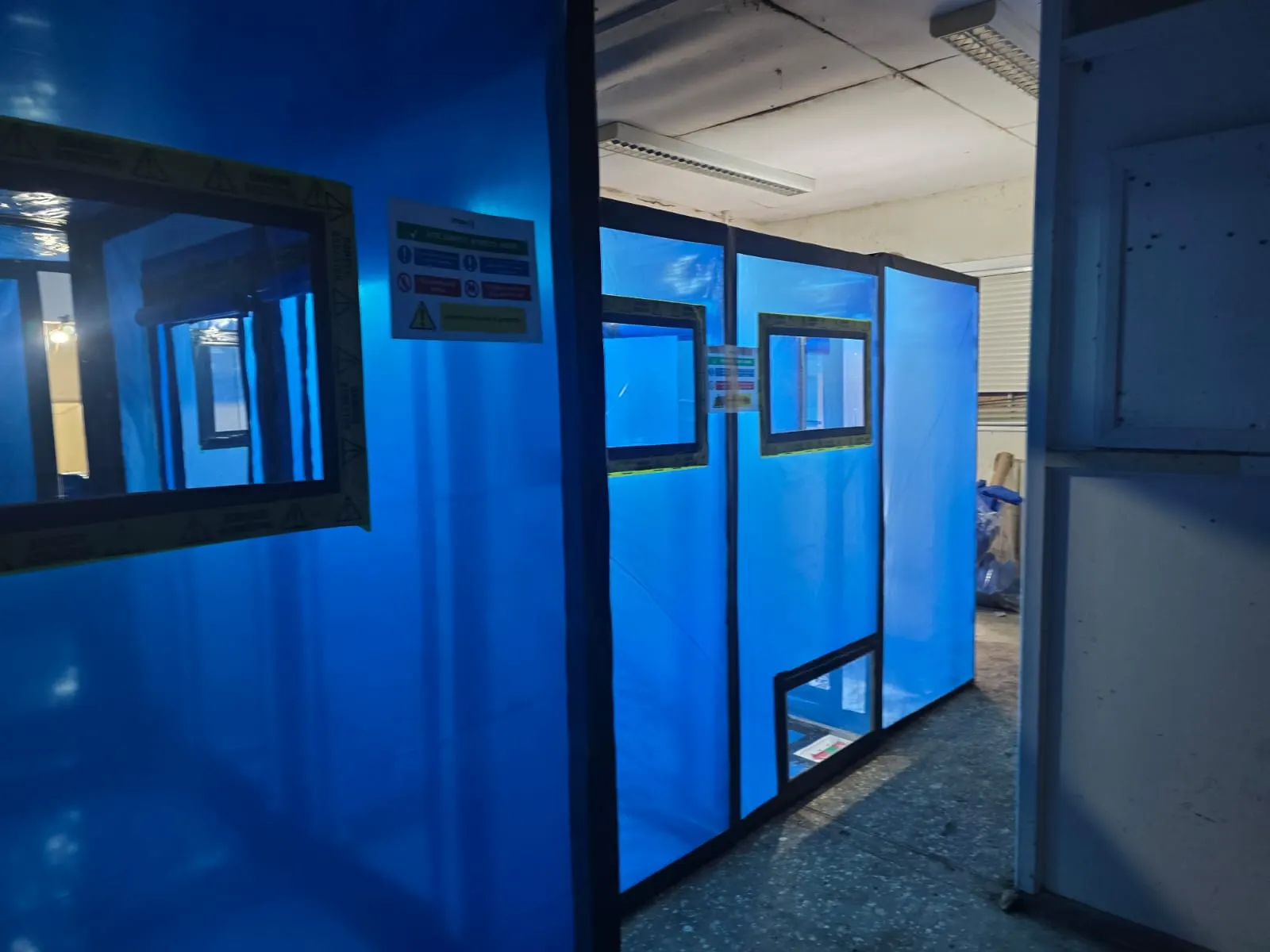
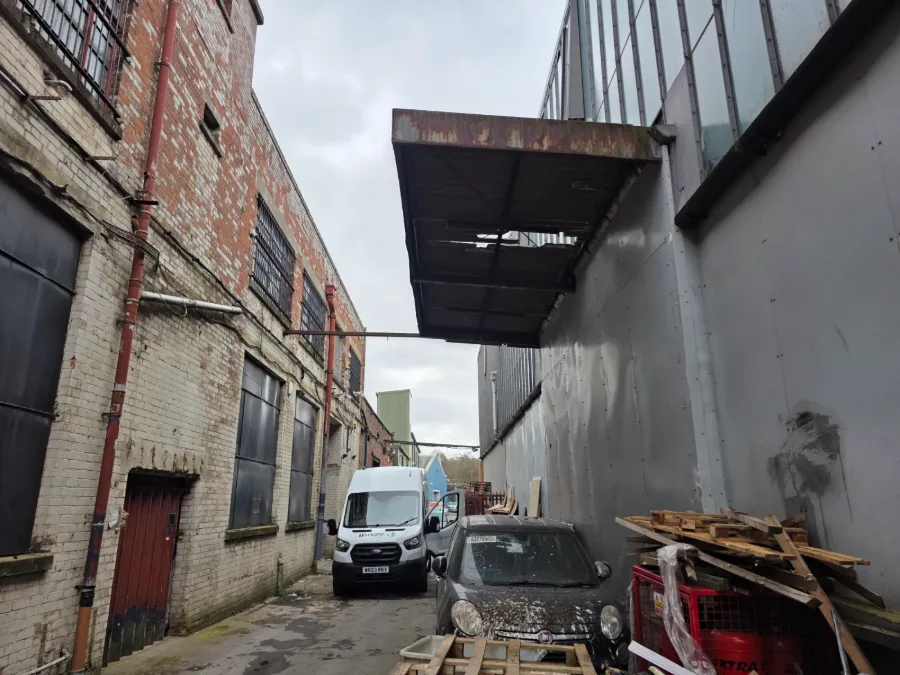
The North West's mills, works and factory sheds were exactly the buildings asbestos was made for: hot processes, steam pipework, steel frames and fire risk. Between the 1940s and 1970s that meant
lagged pipe runs and calorifiers,
sprayed limpet coatings on steelwork, AIB linings and fire breaks, asbestos cement roofs and rainwater goods, gaskets and rope seals on plant, and bitumen adhesives under later floor coverings. A single mill refurbishment can encounter every category of asbestos product in one building.
Where it turns up is fairly predictable once you know the building type.
Roof and envelope: cement sheeting and north-light glazing surrounds, gutters, downpipes,
soffits and verges, and
bitumen roofing felt on flat sections.
Structure: sprayed coatings on steel beams and columns, often above a later suspended ceiling where nobody has looked.
Services: lagging on steam and condensate runs, calorifiers, boiler houses and the flues off them.
Internal fabric: AIB linings to fire breaks, riser cupboards, lift motor rooms and sub-stations.
Plant: gaskets, rope seals and friction products still sitting in machinery that was never removed when the line stopped. And underfoot, thermoplastic tiles with bitumen adhesive beneath later vinyl or carpet.
Mills also tend to have been altered repeatedly. A weaving shed that became a warehouse and then a trade counter may carry three eras of material in the same roof void, which is why one sample rarely settles a mill.