01Will you have to close our shop or office?
Usually not. Most retail and office removal is done overnight or out of hours behind sealed enclosures, with the space cleaned, tested and handed back before you reopen. Where daytime work is needed, it’s phased so you keep trading around it.
02Can you work overnight or out of hours?
Yes — nights, weekends and holiday shutdowns are the standard pattern for retail and office clients. Out-of-hours working is included in the quotation.
03How do you keep disruption to a minimum?
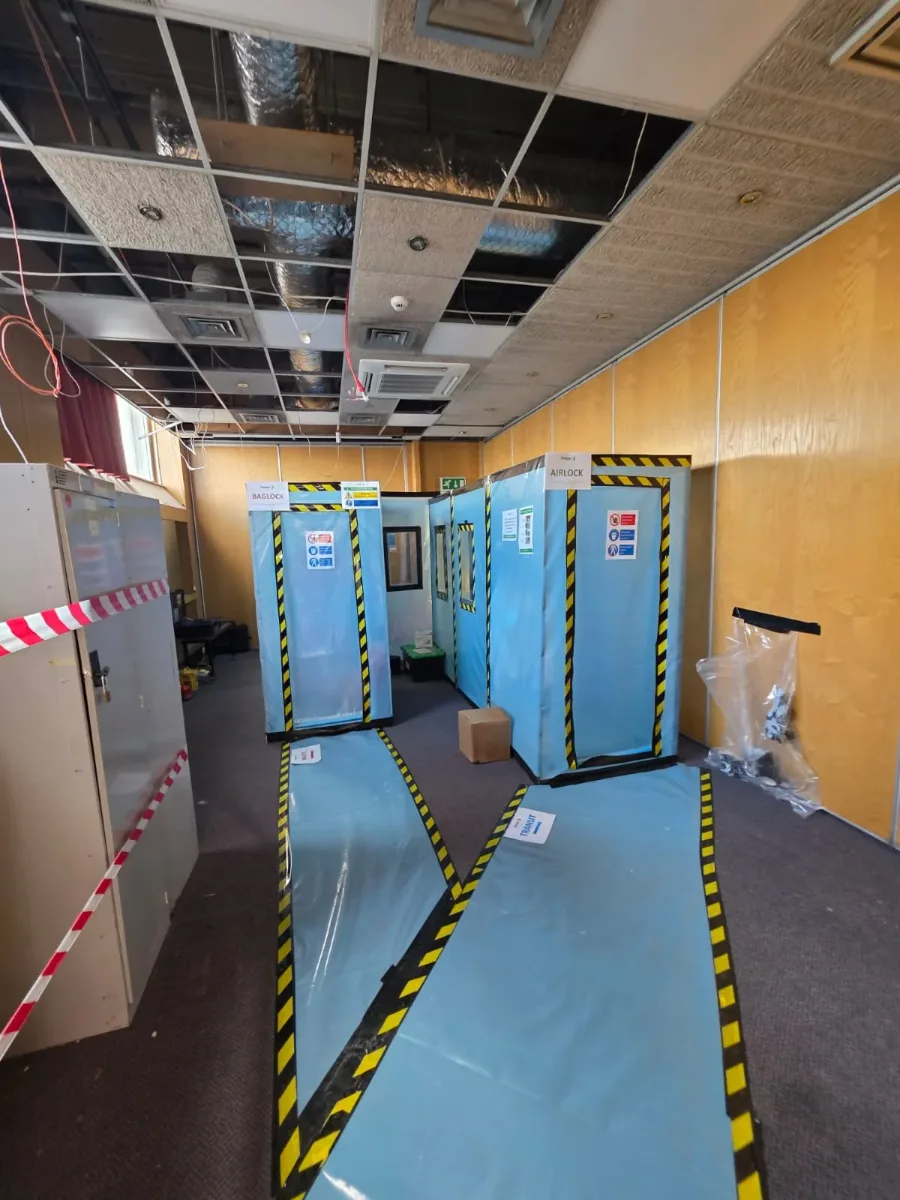
Sealed and screened work areas, phased sectional handbacks, quiet working methods where the building stays occupied, and tight coordination with your store, office or centre management on timing and access.
04What documentation do you provide for the landlord or FM?
A full evidence pack per job: survey report, plan of work, air monitoring results, four-stage clearance certificate and waste consignment notes — one indexed set that satisfies landlord, tenant and facilities manager at once.
05Who pays for removal — landlord or tenant?
The lease decides: dilapidations, licence-to-alter conditions and demise boundaries all matter. We document the scope and condition either way, so both parties negotiate from facts.
06Can you work in occupied office floors?
Yes — floor-by-floor or zone-by-zone phasing with sealed enclosures, weekend switchovers and clean handbacks, so the business keeps working around the programme.
07What about ceiling voids and risers in older blocks?
The classic hiding places. We survey above ceilings and riser-by-riser with your FM team, then remove or encapsulate with services isolated in stages.
08Do you work in shopping centres?
Regularly — coordinated with centre management: service yard logistics, night working, alarm isolations and public segregation all arranged before the first shift.
09How fast can a shop unit be turned around?
Strip and clearance for most units is programmed back-to-back with your shopfitters; timescales depend on the scope and are confirmed in the quotation.
10Will there be smell, dust or alarm problems?
Work happens inside negative-pressure enclosures with filtered air, alarm and detector isolations are arranged in advance, and areas are handed back tested and clean.