info@innov8-group.co.uk Ring us: 0333 335 6375
Not sure which service you need? Ask us
REQUEST A CALL BACK
innov8 Group
01About 02Services 03Costs 04Projects 05News 06Locations 07Contact INSTANT QUOTE
GUIDES · ASBESTOS MATERIALS

Asbestos Insulating Board (AIB).

Of all the asbestos materials our teams encounter, asbestos insulating board (AIB) is one of the most common — and one of the most important to get right. It is a licensed material, meaning by law only an HSE-licensed contractor can remove it. Here is what building owners need to know.

What AIB is and where it's found

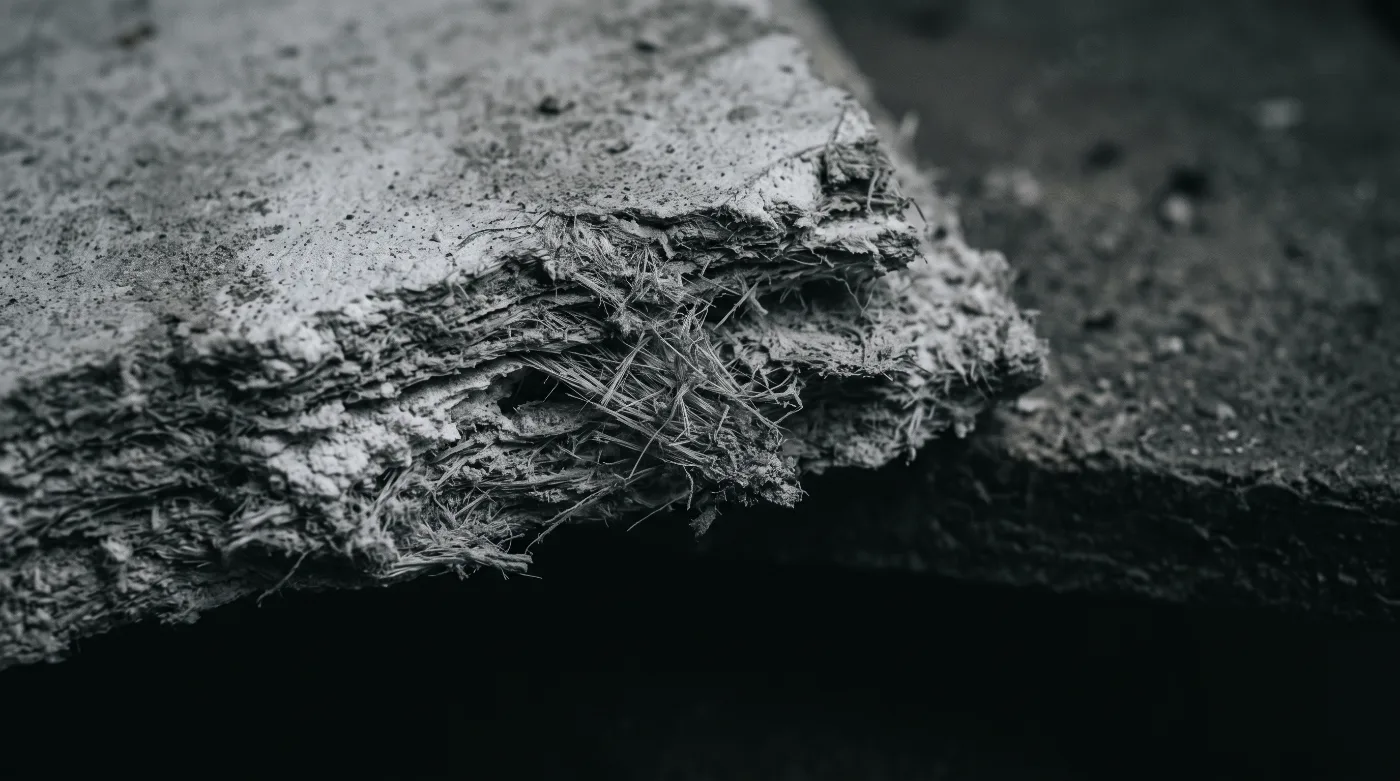
AIB is a relatively soft, low-density board made from asbestos fibres bound in calcium silicate. It was used extensively in UK buildings from the 1950s to the 1980s for fire protection, insulation and general partitioning. You will find it as ceiling panels, wall linings, soffits, boxing around structural steel columns, door panels, and panels inside boiler rooms and plant rooms.
Because it is softer and more friable than tougher materials like asbestos cement, AIB releases fibres far more readily when disturbed — which is precisely why it sits in the licensed category.

How AIB removal works

This is licensed work. Every job starts with sampling and a written quotation; straightforward enquiries can usually be quoted within 24 hours. Removal is carried out with the controls the law requires for this material, waste leaves site with consignment notes, and the area is handed back with the right certification for your records, whether that's a homeowner's document pack or a four-stage clearance certificate.

What AIB removal costs

Typical UK guide range: £100 to £300 per m², including disposal and paperwork. Access, quantity and condition move the number, our cost guide and calculator covers the detail, and once we quote, the price is fixed. Figures are industry guide rates, not Innov8 Group prices, we're typically cheaper. Contact us for an official quotation.
Related
Asbestos removal service → Surveys & sampling → Costs & calculator → Find your local team →
Think you've found it?
Send a photo for initial advice. Straightforward enquiries can usually be quoted within 24 hours. More technical works may require a site visit and assessment before we finalise the quotation.
GET A QUOTE
aib asbestos guide photo
Projects on this material
AIB bathroom ceiling, Preston →AIB bathroom ceiling, Preston 200m² AIB ceiling, St Patrick’s Club →200m² AIB ceiling, St Patrick’s Club Licensed AIB removal, Doncaster →Licensed AIB removal, DoncasterAll projects →

Where AIB hides

AIB was the fireproof workhorse of British construction from the 1950s to the mid-1980s: ceiling tiles and panels, partition walls, soffits outside, fire door cores, boiler cupboard linings, packing pieces under sills, and the walls of service risers in flats and offices. Painted over, it looks like any flat board — which is exactly why it catches out electricians, plumbers and DIYers drilling what they think is plasterboard.
Ceiling tiles and wall panels are the obvious ones. The ones that catch people out are the boxing around structural steel and boilers, the panel behind a night storage heater, the soffit under a walkway, riser and duct linings, the back of an airing cupboard, and infill panels beneath windows in system-built flats and schools. AIB was also used as a fire-check lining on the back of doors, which is why a routine door replacement can turn into a licensed job.

Why AIB is high-risk — and licensed

Unlike cement, AIB is soft and low-density with a much higher asbestos content — often amosite (brown asbestos). Drilling, breaking or unscrewing it releases fibre readily, which is why almost all AIB work is licensed asbestos removal: a sealed enclosure under negative pressure, 14-day HSE notification, trained operatives in RPE, and independent four-stage clearance with air testing before the area is handed back. Budget guidance sits around £100–£300/m² — materially more than cement work, because of everything that surrounds the removal itself.

AIB or asbestos cement? The confusion that catches people out

The two are confused constantly, and the difference matters because it decides whether the work is licensed. Asbestos insulating board is a low-density board, usually 6mm to 12mm thick, soft enough to mark with a fingernail and light for its size. Broken edges look fibrous and open. Asbestos cement is dense, hard and grey, rings when tapped and snaps cleanly.
AIB typically holds 15 to 25 per cent amosite or a mix of amosite and chrysotile, which is why removing it is licensed work. Asbestos cement holds around 10 to 15 per cent chrysotile bound in cement, and removing it usually is not. Neither can be confirmed by eye — a sample analysed by a UKAS-accredited laboratory is the only way to be certain.
A £125 sample test settles it, with results typically available within 48 hours. We remove AIB under full licence across the North West — Manchester, Leeds, Liverpool.

Where AIB has been removed

The Innov8 UK Group project record shows just how widespread AIB is across different building types. In 2025 alone our licensed teams removed AIB from a former nursing home undergoing a pre-demolition strip-out in Southport, an external boiler room at a primary school in Liverpool, a domestic garage ceiling in Rochdale, and signalling and station buildings on the railway. Same material, completely different settings.
See the full project record.

What a licensed AIB removal looks like

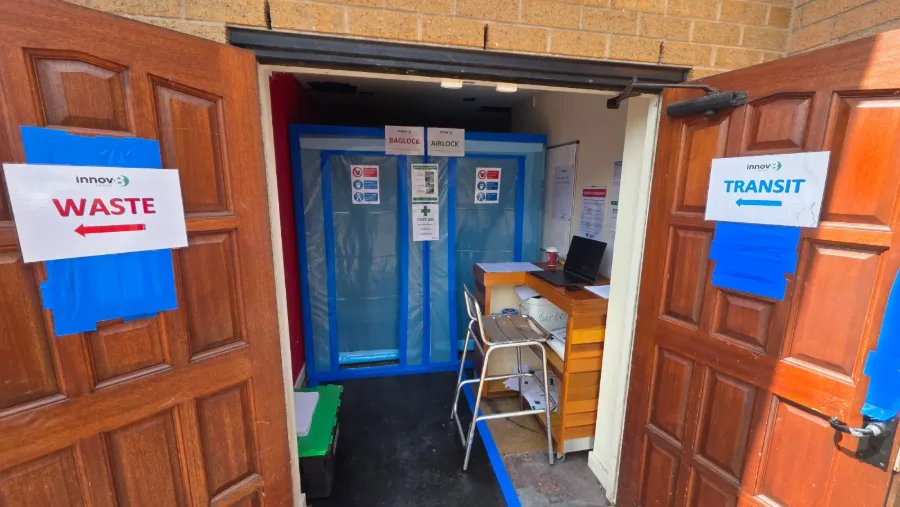
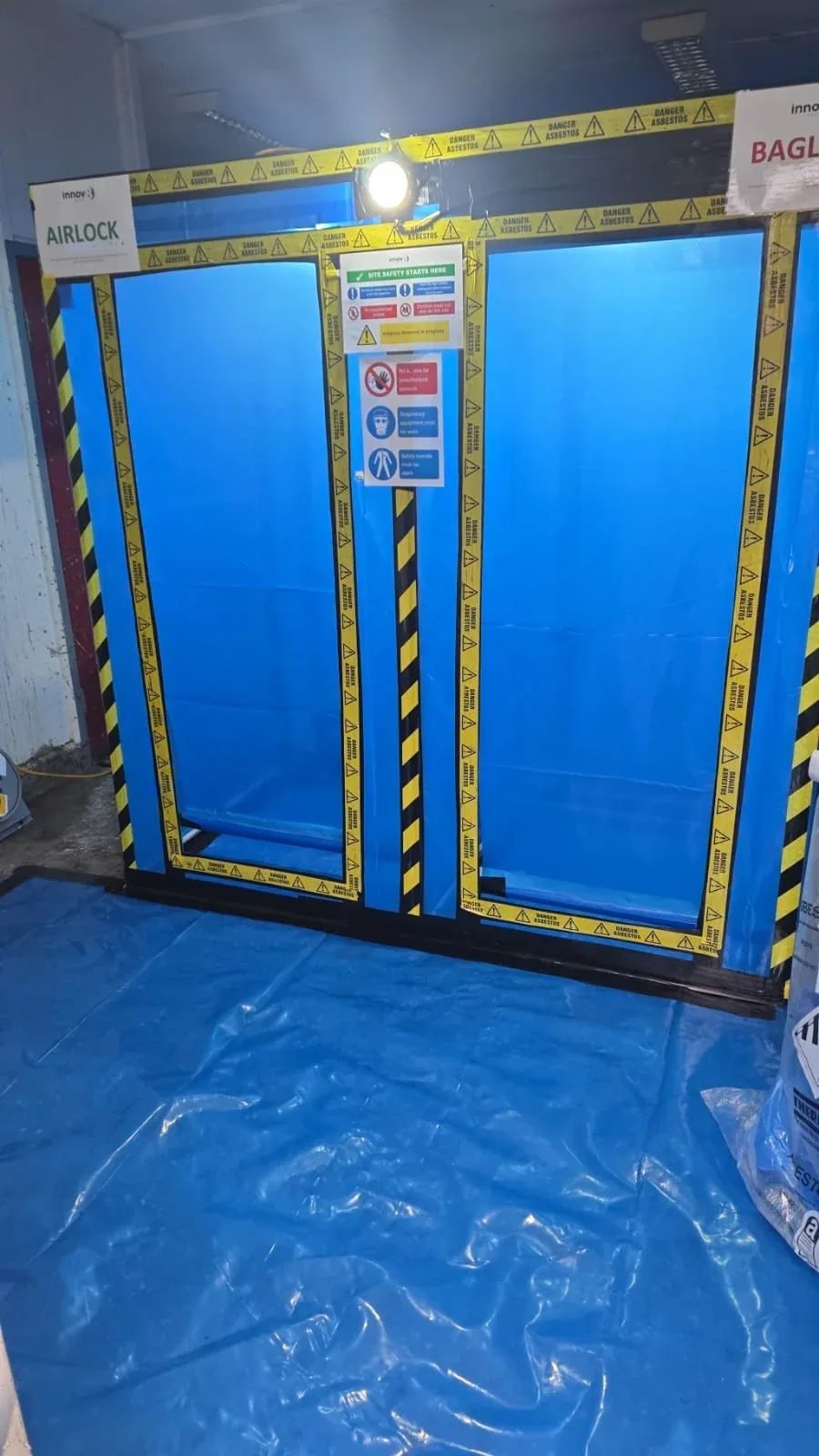
The area is sheeted into a sealed enclosure with an airlock and negative-pressure unit, smoke-tested before work starts. Operatives in RPE remove boards whole wherever possible — unscrewing, not smashing — wrapping each piece as it comes down. Waste leaves through the airlock, double-wrapped and consigned. Then the part clients don’t see coming: a completely independent UKAS-accredited analyst runs the four-stage clearance — visual inspection inside the enclosure, air testing, then dismantling checks — before issuing the certificate of reoccupation. Nobody re-enters the space until that certificate exists.

What AIB removal costs and how long it takes

Because AIB is licensed work, the price carries the enclosure, the negative pressure units, the decontamination unit, air monitoring and the independent clearance — not just the labour to take the board down. A single small room is rarely a cheap job for that reason, while a large ceiling area spreads those fixed costs and comes down considerably per square metre.
The programme also has a fixed floor: licensed work must be notified to the HSE fourteen days before it starts. Enclosure build, removal, clearance and strip-out of the enclosure then typically run from two days for a small area to a fortnight or more for a full floor. Budget guidance is in our cost guide.

If you think you’ve found AIB

Stop work in that area and don’t investigate further — no drilling a corner off, no snapping a piece to look at the edge. Photograph it, keep people away if it’s damaged, and get it sampled. If it’s already been broken — a puncture during DIY, a smashed panel in a void — keep the room closed and unventilated to other rooms and call us: assessment, air testing and environmental cleaning are routine work, and acting quickly keeps a small incident small.
AIB turns up domestically more than people expect: garage ceilings (a very common find), integral garage walls, under-stairs cupboards and porch linings. If a house project touches any of these in a pre-1985 home, budget for a test first — and if it is AIB, factor the licence process into the timetable: the 14-day HSE notification is a legal clock that can’t be shortcut. Call 0333 335 6375; straightforward enquiries can usually be quoted within 24 hours.

If AIB is damaged right now: stop, seal, test

Leave the area, close the door, and keep people out. Do not sweep or vacuum, do not attempt a repair, and do not run extraction or air conditioning that could move air out of the room. Photograph it from a distance if you can do so safely and call a licensed contractor. Damaged AIB is one of the few asbestos situations that genuinely warrants same-day attention.
Most AIB discoveries happen mid-refurbishment: a ceiling comes down, a cupboard is stripped, and a soft grey board nobody expected appears. The right response is simple — stop work in that area, close the door, and get a sample tested before anyone touches it again. If it is AIB, we quote for licensed removal with the enclosure, notification and independent clearance built in; if the area has already been disturbed, we can also quote the environmental clean. What you should never do is let the job "carry on carefully" — a broken AIB board spreads fibres through a whole property, and the decontamination costs far more than the pause. Budget guidance is in our cost guide.
FREQUENTLY ASKED

Asbestos insulating board — your questions answered

What was asbestos insulating board most widely used as?
Fire protection. From the 1950s to the 1980s AIB was used primarily as a fire-resisting board — ceiling panels, wall linings, soffits, boxing around structural steel columns, door panels, and panels in boiler and plant rooms — as well as for thermal insulation and general partitioning. If you have drilled, cut or broken a board you think may be AIB, stop work — what happens next.
What does AIB stand for?
Asbestos insulating board. It is also written as asbestos insulation board — the same material either way. AIB is not asbestos cement: cement products are denser, harder and non-licensed, while AIB is soft, friable, and its removal is licensed work.
What does asbestos insulating board look like?
Like ordinary board — that’s the problem. It was used everywhere from the 1950s to mid-1980s and can’t be identified by eye; only a test confirms it.
Is AIB dangerous?
It’s one of the higher-risk materials: it’s soft, and drilling, breaking or removing it releases fibres readily. Never work on suspected AIB yourself.
Does AIB removal need a licensed contractor?
Yes — most AIB work is licensed asbestos removal, requiring enclosures, HSE notification and independent clearance. We hold a full HSE licence.
What’s the difference between AIB and asbestos cement?
Cement is hard and dense with fibres locked in; AIB is softer with a much higher asbestos content and releases fibres far more easily — which is why the law treats them so differently.

Not sure which
service you need?

Lee ScottRichard JohnstoneAlyssia JacksonLindsay ScottMartin Tyrer
Send a photo for initial advice
ASK US or call 0333 335 6375
CONTACT US

Talk to a specialist today

CALL US NOW
0333 335 6375
Mon to Fri 8am to 6pm · Emergencies day & night
Tap to call →
EMAIL US
info@innov8-group.co.uk
Attach photos for a faster quote
Send an email →
CALL BACK
We ring you back the same working day
Leave your number, we do the chasing
Arrange a call →
QUOTATION FORM
Quotation usually within 24 hours for straightforward enquiries
Send the details and photos
Start your quote →
Innov8 Group
HSE-licensed asbestos removal and environmental contractor. Surveys, removal, demolition, remediation and hazardous waste — one team, one responsibility. North West based, working UK-wide.
Follow us on social media
PAGES
About usServicesCostsProjectsNewsLocationsAccreditationsFAQsSurvey analyserContact
SECTORS
HomeownersLandlordsHousing associationsSchoolsHealthcareMain contractorsIndustrialRetail & officesPublic sectorDevelopers & land remediation
CONTACT
0333 335 6375 info@innov8-group.co.uk Unit 7, Wilsons Business Park Centre, Manchester M40 8WN
website by pixelmonster
5-star rated by our customers
5-star rated on Trustpilot reviews
5-star rated on Yell business reviews
Verified reviews across the web
Trustindex© 2026 Innov8 UK Group Ltd. All rights reserved. Privacy Cookies
website by pixelmonster