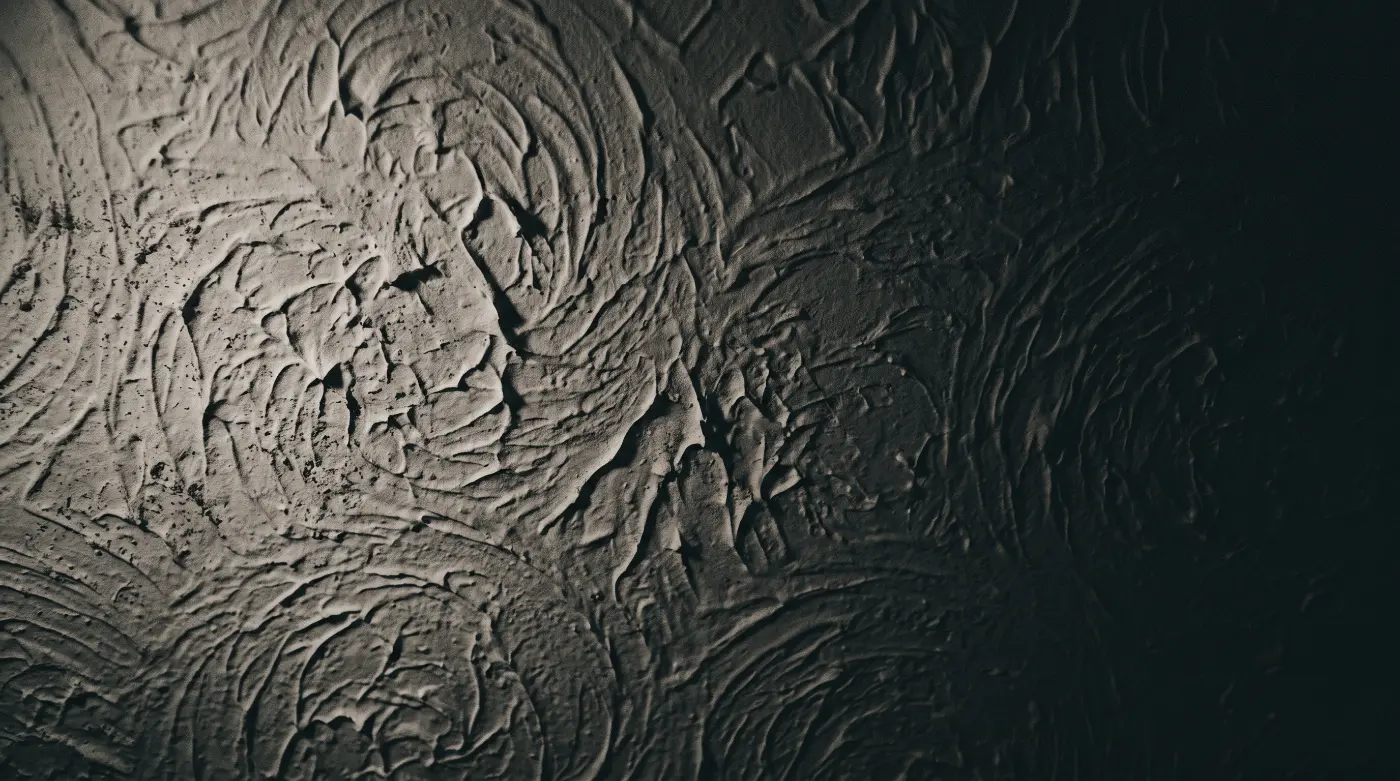
Does Artex contain asbestos, and until what year was it used?
Artex and similar textured coatings applied before the mid-1980s very commonly contain chrysotile (white) asbestos — typically 1–4% by weight. Asbestos was phased out of most coating production in the mid-80s, but old stock stayed in use, so coatings applied right up to the early 1990s can still contain it. Only lab testing can say for certain — you cannot tell by looking.
Is flaking or damaged Artex dangerous?
Sound, painted Artex releases virtually no fibres and is low risk left alone. Flaking, water-damaged or crumbling Artex is a different matter: once the coating breaks up, fibres can be released into the room. Don’t sand, scrape or vacuum it — keep people away from the damaged area and get it tested. If it does contain asbestos, the damaged section can usually be repaired, sealed or removed quickly.
Can I paint, skim or plaster over Artex instead of removing it?
Yes — if the coating is sound, painting over it or having it skimmed with plaster are both legitimate ways to manage it, and often the cheapest. The asbestos stays in place, so it must be recorded (tell any tradesperson before they drill or sand the ceiling), and it becomes a job for us the day the ceiling itself needs work. Never sand Artex to “key” it before skimming — that’s exactly the disturbance that releases fibres.
How much does Artex removal cost?
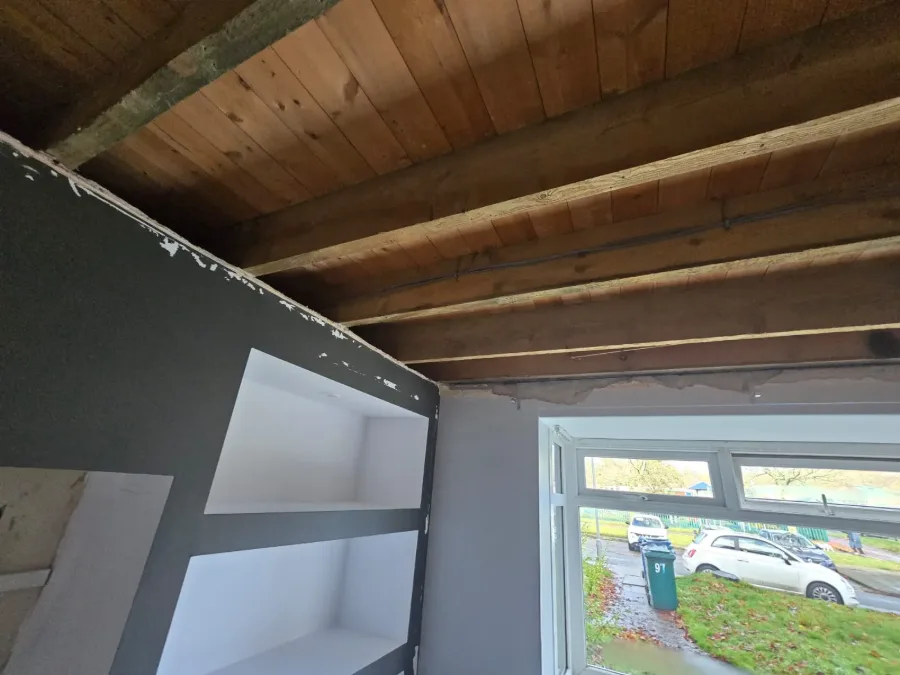
The typical UK guide range is £25–£60 per m² including disposal and paperwork. A single room ceiling of 15–20m² usually lands between about £400 and £1,200 depending on access and condition; hallways and whole-house jobs are priced per m² on the same basis. We quote from photos or a visit; straightforward enquiries can usually be quoted within 24 hours.
Do I need the Artex tested before any work?
Yes — before any sanding, skimming, drilling or removal, a sample should be tested by a UKAS-accredited lab. It’s quick and inexpensive, and it decides everything: if it’s asbestos-free you can treat it like any other ceiling; if not, the work needs the right controls. We arrange sampling and testing and give you the certificate either way.
Can I drill or sand Artex?
Not until it’s been tested. Drilling, sanding and scraping are exactly the actions that release fibres from an asbestos-containing coating — a “quick key” with sandpaper before skimming is the classic mistake. Get a
£125 test first: if it’s clear you can work normally, and if not, the job needs the right controls.
Is it cheaper to encapsulate Artex than remove it?
Usually yes. Skimming or sealing over sound Artex costs a fraction of removal (which runs £25–£60/m²), and it’s a legitimate way to manage the material. The trade-off: the asbestos is still there, it must be declared when you sell, and any future ceiling work has to account for it. Our
encapsulation service covers both routes.