info@innov8-group.co.uk Ring us: 0333 335 6375
Not sure which service you need? Ask us, it's free
REQUEST A CALL BACK
innov8 Group
01About 02Services 03Costs 04Projects 05News 06Locations 07Contact INSTANT QUOTE
GUIDES · BUILDING TYPES

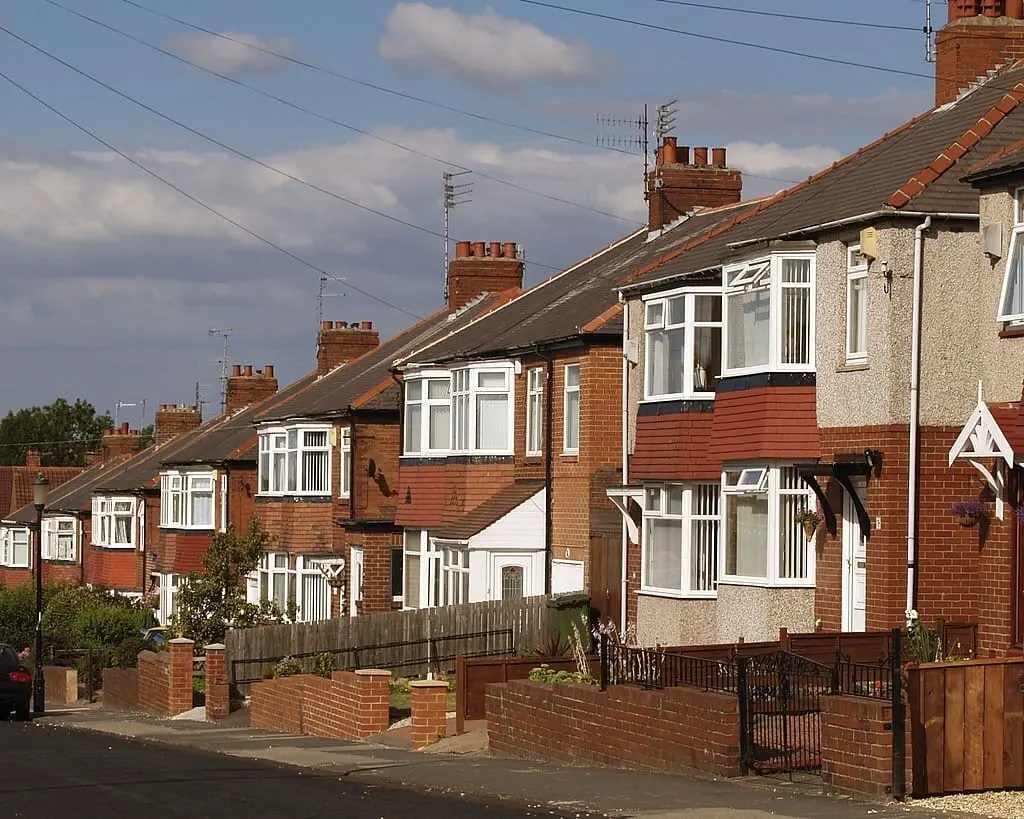
Asbestos in 1930s to 1960s Houses.

Inter-war and post-war houses are the classic asbestos generation: cheap, fireproof materials used everywhere from the roofline to the floor. Here’s where to look before you renovate.

The usual suspects

Textured ceilings, thermoplastic floor tiles on bitumen, cement soffits and gutters, corrugated garage and coal-shed roofs, boiler flues, loft water tanks, bath panels and window boards. Most are safe left alone, and dangerous when drilled, sanded or ripped out during renovation.

Renovating or extending?

Any pre-2000 home needs asbestos checked before building work, and for anything structural a refurbishment survey is the legal starting point. A survey costs far less than stopping a build mid-way because a ceiling came back positive.

What it means for buyers and sellers

Surveyors flag suspected asbestos on most homes of this era. It rarely kills a sale, what buyers and lenders want is evidence: a test result, a management note or a removal certificate. We provide all three.
Related
Surveys & sampling → Asbestos removal → Costs & calculator → Find your local team →
Not sure what you have?
Send a photo for free identification and a fixed quote within 24 hours.
GET A FIXED QUOTE
1930s homes asbestos guide photo
Projects on this material
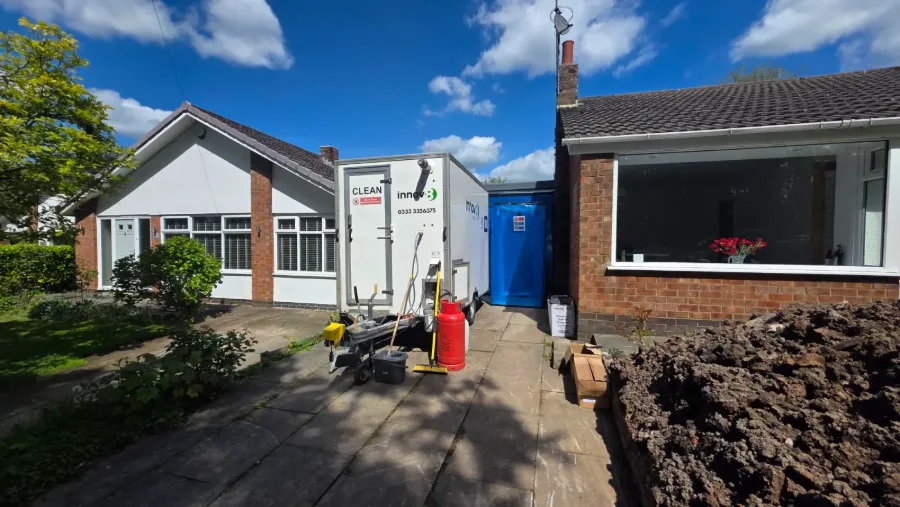
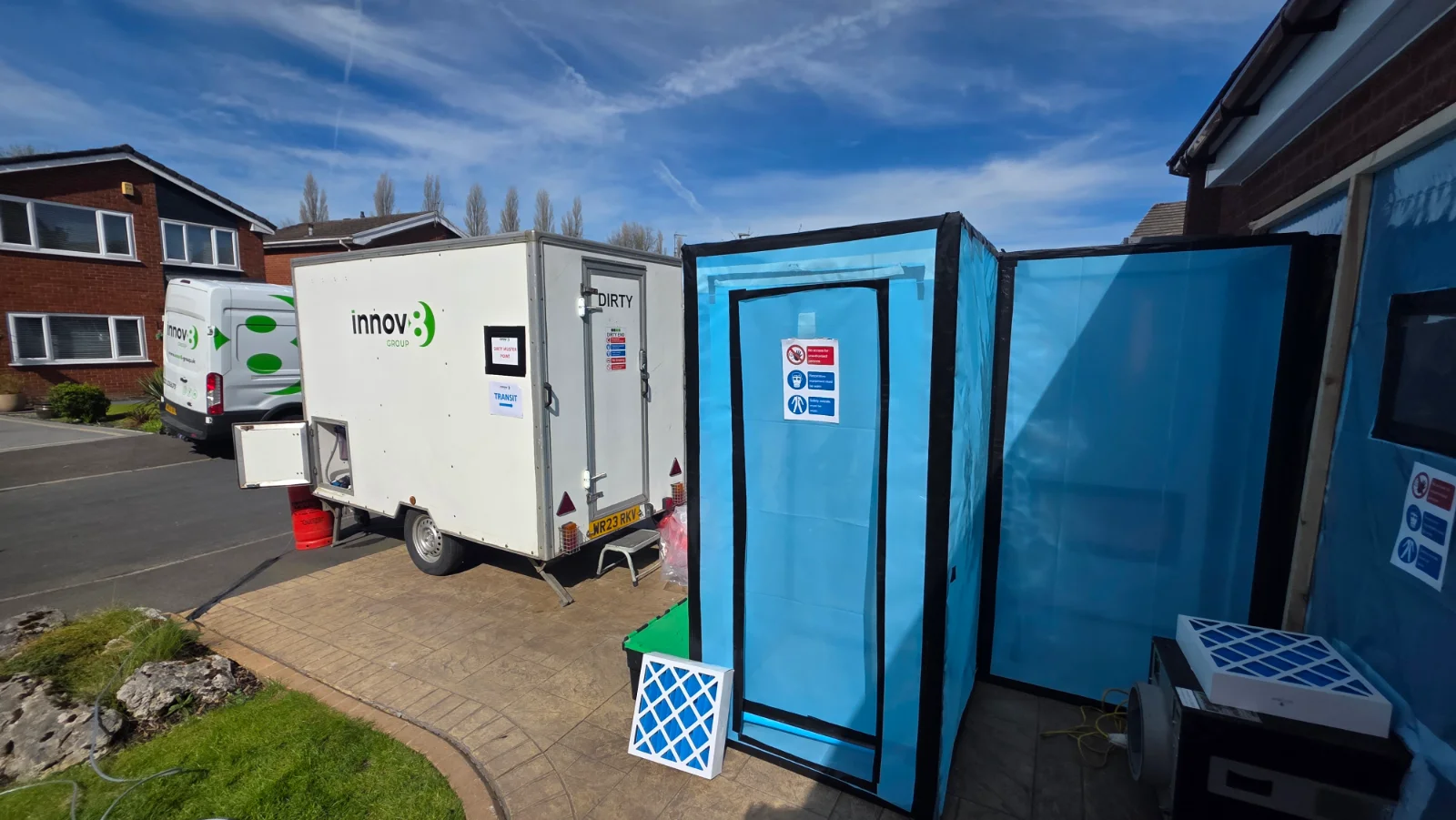
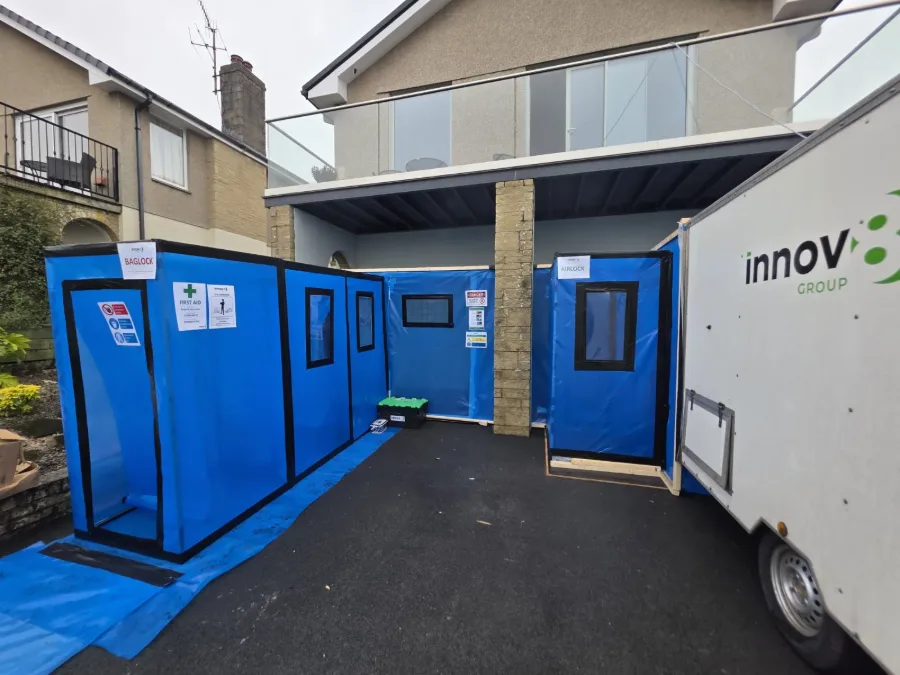
AIB garage ceiling, Robin Lane →AIB garage ceiling, Robin Lane AIB garage ceiling, Walter Scott Ave →AIB garage ceiling, Walter Scott Ave AIB garage ceiling, The Spinney →AIB garage ceiling, The SpinneyAll projects →

Room by room: where it hides

Loft: older insulation debris around tanks and flues, asbestos cement water tanks, and — rarely but seriously — loose-fill insulation poured between joists. Living rooms: Artex and textured ceilings, older fire surrounds and the panels behind gas fires. Kitchen and bathroom: thermoplastic floor tiles and their bitumen adhesive, rigid bath panels, boiler flues and the insulating board around boilers and airing cupboards. Outside: the garage and shed roof, soffits and fascias, guttering and downpipes in grey cement.

Before you renovate

Renovation is when asbestos in an older house actually matters — walls opened, ceilings pulled down, floors lifted. For any pre-2000 home, a refurbishment survey before major work is the safe route, and for contractors it’s the legally required one. A management survey runs £200–£500 and a full refurbishment & demolition survey £500–£1,200 — a fraction of the cost of a mid-job discovery, and single suspect materials can be answered with a £125 sample test.

Low risk vs needs-attention

Most asbestos in older homes is safest left managed: sound floor tiles under carpet, painted Artex, an intact cement shed roof. What needs professional attention is anything soft, damaged or in the way of work — crumbling pipe lagging, broken insulating board, flaking coatings, or any material a project is about to disturb. We survey, test and quote across the North West — most often in Manchester, Liverpool and Preston.

Why these decades used so much asbestos

Houses of the 1930s–60s were built and modernised through asbestos’s golden age. It was cheap, fireproof, waterproof and easy to mould — so it went into whatever the era was installing: cement roofs and rainwater goods between the wars, insulating board around the new central heating boilers of the 50s and 60s, thermoplastic floor tiles over new concrete floors, and textured coatings as the fashionable ceiling finish. A single semi can easily carry six or seven different asbestos products, each with a different risk level, which is why blanket panic and blanket complacency are both wrong — the answer is knowing which is which.

What a survey actually gives you

A surveyor walks every room, loft and outbuilding, samples suspect materials, and returns a register: what’s asbestos, where it is, what condition it’s in, and what — if anything — needs action. For most older homes the honest outcome is “manage in place” for the majority of items and a shortlist of one or two worth removing. That document then protects you three ways: your family knows what not to drill, your tradespeople know what they’re working around, and your future sale has answers ready before the buyer’s surveyor asks the question.
One more habit worth forming: keep a simple record. Once you know where the asbestos in your house is — even just a survey report in a drawer and a note taped inside the meter cupboard — every future decision gets easier and cheaper: trades quote accurately, renovations plan around it, and when you sell, the disclosure questions have ready answers instead of anxious guesses. Fixed quotes in 24 hours on 0333 335 6375.

The eras at a glance

1930s: cement roofs, gutters and downpipes; early fire surrounds; lagged pipework in larger houses. 1950s: the boom years — insulating board arrives around fireplaces and boilers, thermoplastic tiles cover new solid floors, cement garages spring up in gardens. 1960s: peak use — Artex gains ground, AIB is everywhere from ceilings to porch linings, and system-built additions bring sprayed coatings. Homes updated in the 70s and 80s often gained a second generation of materials on top of the first, which is why one survey beats a decade of guessing.

Buying or renovating? Do the survey first

The most expensive asbestos mistakes in older homes happen in the first fortnight of ownership, when new owners strip ceilings, lift floors and knock through walls before anyone has tested anything. A refurbishment survey before the builders start costs a fraction of stopping a contaminated job — and if you are still at the buying stage, a survey or targeted sample tests on the Artex, floor tiles and garage roof gives you real numbers to negotiate with instead of a surveyor's vague caution. Once you know what is there, most of it is either safe to leave, cheap to remove, or both.
FREQUENTLY ASKED

Common questions

Where is asbestos most commonly found in older homes?
Artex ceilings, floor tiles, garage and shed roofs, soffits, pipe lagging, insulation board around boilers and airing cupboards, and bath panels.
My house was built before 2000 — should I worry?
Not automatically. Asbestos in good condition is usually safest left managed. The risk comes when it’s disturbed — which is why a survey before any renovation matters.
Do I need a survey before renovating?
Yes — for any pre-2000 home, a refurbishment survey before major work is the safe (and for contractors, legally required) route.
How much does a home survey cost?
A management survey typically costs £200–£500 and a refurbishment & demolition survey £500–£1,200, with individual sample tests £125.
Do old fire surrounds contain asbestos?
Commonly, yes — pre-1980s fire surrounds often used asbestos panels or infill boards behind and beneath them, right where the heat was. They’re fine in place; the risk moment is ripping one out during renovation. Test before removal — it’s quick, and if it’s positive the surround can be removed properly for a fixed price.
RELATED:Asbestos surveys → Costs & calculator → Sampling & testing →
REVIEWS

Rated 5.0 by our customers

★★★★★Google reviews
REVIEW SUMMARY
Based on 26 reviews
Innov8 Group provides exceptional asbestos services marked by responsive communication and professionalism. Customers praise their swift scheduling and affordable pricing.
J
James Hough
1 year ago
★★★★★
Called Innov8, spoke to Lee on the phone, next day removal of my floor tiles, now I'm asbestos free. Couldn't recommend a better firm.
P
Paul Smith
8 months ago
★★★★★
I had an asbestos ceiling removed from my kitchen, and the team at Innov8 Group were absolutely amazing from start to finish.
D
Daniel Evans
1 year ago
★★★★★
The team were fantastic help when we were buying a house with suspected asbestos. They reviewed the property before purchase.
RELATED READING Unusual places asbestos hides →

Not sure which
service you need?

Lee ScottRichard JohnstoneAlyssia JacksonLindsay ScottMartin Tyrer
Send a photo — we’ll tell you what it is, free
ASK US, IT'S FREE or call 0333 335 6375
CONTACT US

Talk to a specialist today

CALL US NOW
0333 335 6375
Mon to Fri 8am to 6pm · Emergencies day & night
Tap to call
EMAIL US
info@innov8-group.co.uk
Attach photos for a faster quote
Send an email
CALL BACK
We ring you back the same working day
Leave your number, we do the chasing
Arrange a call
QUOTATION FORM
Fixed written quote within 24 hours
Send the details and photos
Start your quote
Innov8 Group
HSE-licensed asbestos removal and environmental contractor. Surveys, removal, demolition, remediation and hazardous waste — one team, one responsibility. North West based, working UK-wide.
Follow us on social media
PAGES
About usServicesCostsProjectsNewsLocationsAccreditationsFAQsSurvey analyserContact
SECTORS
HomeownersLandlordsHousing associationsSchoolsHealthcareMain contractorsIndustrialRetail & officesPublic sectorDevelopers & land remediation
CONTACT
0333 335 6375 info@innov8-group.co.uk Unit 7, Wilsons Business Park Centre, Manchester M40 8WN
website by pixelmonster
5-star rated by our customers
5-star rated on Trustpilot reviews
5-star rated on Yell business reviews
Verified reviews across the web
Trustindex© 2026 Innov8 UK Group Ltd. All rights reserved. Privacy Cookies
website by pixelmonster