info@innov8-group.co.uk Ring us: 0333 335 6375
Not sure which service you need? Ask us, it's free
REQUEST A CALL BACK
innov8 Group
01About 02Services 03Costs 04Projects 05News 06Locations 07Contact INSTANT QUOTE
GUIDES · ASBESTOS MATERIALS

Asbestos and your health — the honest answers

If you’ve just found out you may have been near asbestos, take a breath — for most people in that position the risk is far smaller than the fear. This page explains how asbestos actually affects the body, which situations genuinely matter, and what to do next. No scaremongering, no sales pitch.

Where you'll find it

Typically found in ceilings and feature walls in living rooms, hallways and bedrooms, most commonly in homes decorated between the 1960s and mid-1980s across every UK town. If your property fits that description and the material is undisturbed, don't panic, and don't drill, sand or break it. Send us a photo and we'll tell you what you're looking at, free.

How removal works

This is notifiable non-licensed work. Every job starts with sampling and a fixed written quote within 24 hours. Removal is carried out with the controls the law requires for this material, waste leaves site with consignment notes, and the area is handed back with the right certification for your records, whether that's a homeowner's document pack or a four-stage clearance certificate.

What it costs

Typical UK guide range: £25 to £60 per m², including disposal and paperwork. Access, quantity and condition move the number, our cost guide and calculator covers the detail, and once we quote, the price is fixed. Figures are industry guide rates, not Innov8 Group prices, we're typically cheaper. Contact us for an official quotation.
Related
Asbestos & your health Surveys & sampling → Costs & calculator → Find your local team →
Think you've found it?
Send a photo for free identification and a fixed quote within 24 hours.
GET A FIXED QUOTE
asbestos health guide photo
Projects on this material
Licensed AIB removal, Doncaster →Licensed AIB removal, DoncasterAll projects →

How asbestos harms the body

Asbestos is only a health risk when its fibres become airborne and are breathed in. The finest fibres can travel deep into the lungs and stay there; the body struggles to break them down, and over many years the trapped fibres can cause inflammation and scarring. Two things follow from that. First, asbestos left sealed and undisturbed in a building generally releases nothing — which is why managing it in place is often a legitimate option. Second, the harm is dose-driven: the serious diseases are overwhelmingly linked to breathing significant amounts of fibre, repeatedly, usually over working years.

“I think I was exposed once — should I worry?”

The honest answer has two halves. No level of asbestos exposure is officially classed as “safe”, so nobody can promise you zero risk. But the risk from a single, brief, low-level exposure — a drilled hole, a broken ceiling tile, an afternoon in a dusty room — is very low, and the diseases on this page are overwhelmingly found in people exposed heavily and repeatedly through their work: laggers, joiners, shipyard and factory workers, tradespeople of the 1950s–80s. Don’t panic, and don’t let anyone frighten you into panic-buying services. Do make a note of what happened and when, mention it to your GP, and if the material is still there, get it tested so it can’t happen again. If the disturbance has just happened, our disturbed asbestos guide covers the immediate steps.

The asbestos diseases, plainly

Asbestosis is scarring of the lung tissue that makes breathing progressively harder. It is caused by heavy, long-term exposure — it is an industrial disease of people who worked with the material for years, not something a householder gets from one incident.

Mesothelioma is a cancer of the lining of the lung (and sometimes the abdomen) and is the disease most strongly tied to asbestos. It can follow lower levels of exposure than asbestosis, which is exactly why the UK now treats the material with such caution.

Asbestos-related lung cancer looks like other lung cancers and is linked to heavier exposure, with smoking multiplying the risk sharply.

Pleural plaques are areas of thickening on the lung lining, usually found by chance on a scan. They are the mildest finding on this list: normally symptomless, not cancer, and not something that turns into cancer — they are best understood as a marker that exposure happened at some point.

Why symptoms take decades

Asbestos disease is slow. The gap between exposure and illness — the latency period — is typically measured in decades, commonly 15 to 60 years. That is why most people diagnosed today were exposed in the 1960s–80s, and why a clean bill of health decades after an exposure means a great deal. It is also why the exposure history you give your GP matters: a chest problem today can be connected to work done a working lifetime ago.

Smoking and asbestos

If you smoke and have an asbestos exposure history, the two don’t just add together — they multiply. Smoking damages the lungs’ ability to clear fibres, and the combined lung-cancer risk is far higher than either cause alone. For anyone with past exposure, stopping smoking is the single most effective thing you can do for your future lung health — more effective than anything a contractor, a lawyer or a worry can offer.

Secondary exposure — the work-clothes route

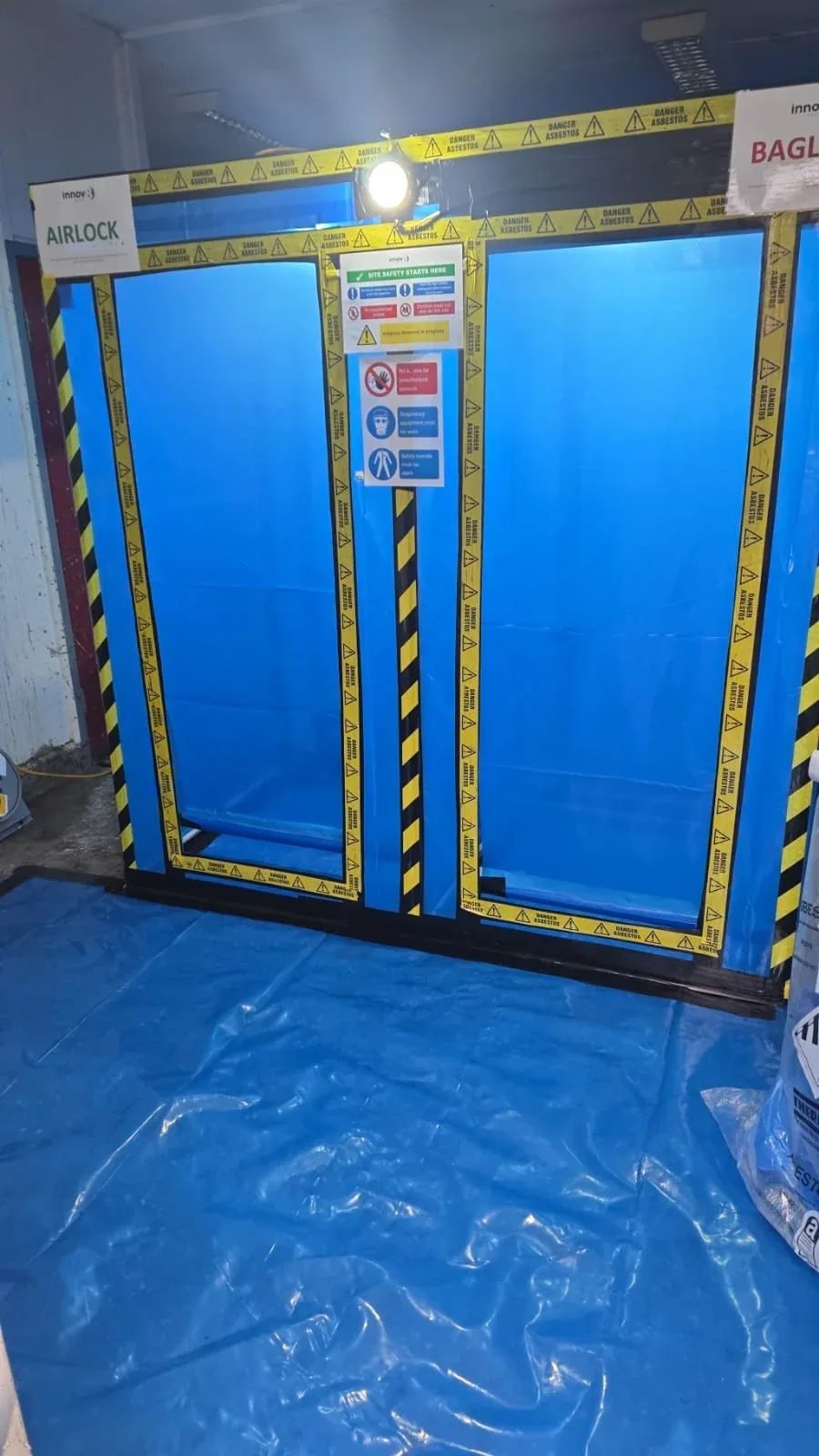
Some people were exposed without ever setting foot on a site: the families of asbestos workers, exposed to dust carried home on overalls that were shaken out and washed by hand. It is a genuinely sad chapter of the story, and it is why modern licensed work is built around decontamination — nothing leaves one of our enclosures except through an airlock, and work clothing never goes home. If this describes your family history and you have symptoms, tell your GP exactly that.

Worried? Here’s the right route

Health worries belong with health professionals. See your GP, tell them about your asbestos history — when, where, how much, how often — and let them decide whether anything needs checking. There is no home test, no private shortcut we can sell you, and you should be wary of anyone who implies otherwise. Our job is the other half of the problem: making the building safe. If the material that worried you is still in place, we can test it for £125, advise honestly whether it needs removal or can be safely managed, and give you the paperwork that proves the matter is closed. We do that every week for homeowners across Manchester, Liverpool and Leeds — and removal costs are set out openly on our costs page.
This guide is general information, not medical advice. If you’re concerned about your health, speak to your GP.
FREQUENTLY ASKED

Asbestos health questions, answered honestly

What happens if you breathe in asbestos once?
For a single, brief, low-level exposure the risk to your long-term health is very low — the serious asbestos diseases are overwhelmingly linked to repeated, heavy exposure over years, usually at work. No exposure is officially “safe”, so note what happened, mention it to your GP, and get the material tested so it isn’t disturbed again.
What are the first symptoms of asbestos-related disease?
The common early signs are breathlessness that creeps up over time, a persistent cough, chest or shoulder pain, and fatigue. They appear decades after exposure, not days or weeks — new symptoms straight after a disturbance are far more likely to be anxiety or ordinary dust irritation. Any persistent chest symptom belongs with your GP either way.
What is the difference between asbestosis and mesothelioma?
Asbestosis is scarring of the lung tissue itself, caused by years of heavy exposure, and it progresses slowly. Mesothelioma is a cancer of the lung lining, strongly linked to asbestos and possible after lower exposure levels. They are different diseases with different outlooks — a doctor distinguishes them with scans and specialist assessment.
What are pleural plaques?
Pleural plaques are patches of thickening on the lining of the lung, usually found incidentally on a scan. They are generally symptomless, they are not cancer, and they do not turn into cancer — they simply show that some asbestos exposure happened in the past. Most people with plaques never develop a serious asbestos disease.
Does smoking make asbestos exposure worse?
Yes — significantly. Smoking and asbestos multiply each other’s lung-cancer risk rather than just adding together. If you have any asbestos exposure history, stopping smoking is the single most effective step you can take to protect your future health.
How long after asbestos exposure do diseases appear?
Typically 15 to 60 years. This long latency is why people diagnosed today were usually exposed in the 1960s to 1980s, and why it’s worth telling your GP about exposure from long ago — and why decades of good health after a brief exposure is genuinely reassuring.

Not sure which
service you need?

Lee ScottRichard JohnstoneAlyssia JacksonLindsay ScottMartin Tyrer
Send a photo — we’ll tell you what it is, free
ASK US, IT'S FREE or call 0333 335 6375
CONTACT US

Talk to a specialist today

CALL US NOW
0333 335 6375
Mon to Fri 8am to 6pm · Emergencies day & night
Tap to call
EMAIL US
info@innov8-group.co.uk
Attach photos for a faster quote
Send an email
CALL BACK
We ring you back the same working day
Leave your number, we do the chasing
Arrange a call
QUOTATION FORM
Fixed written quote within 24 hours
Send the details and photos
Start your quote
Innov8 Group
HSE-licensed asbestos removal and environmental contractor. Surveys, removal, demolition, remediation and hazardous waste — one team, one responsibility. North West based, working UK-wide.
Follow us on social media
PAGES
About usServicesCostsProjectsNewsLocationsAccreditationsFAQsSurvey analyserContact
SECTORS
HomeownersLandlordsHousing associationsSchoolsHealthcareMain contractorsIndustrialRetail & officesPublic sectorDevelopers & land remediation
CONTACT
0333 335 6375 info@innov8-group.co.uk Unit 7, Wilsons Business Park Centre, Manchester M40 8WN
website by pixelmonster
5-star rated by our customers
5-star rated on Trustpilot reviews
5-star rated on Yell business reviews
Verified reviews across the web
Trustindex© 2026 Innov8 UK Group Ltd. All rights reserved. Privacy Cookies
website by pixelmonster