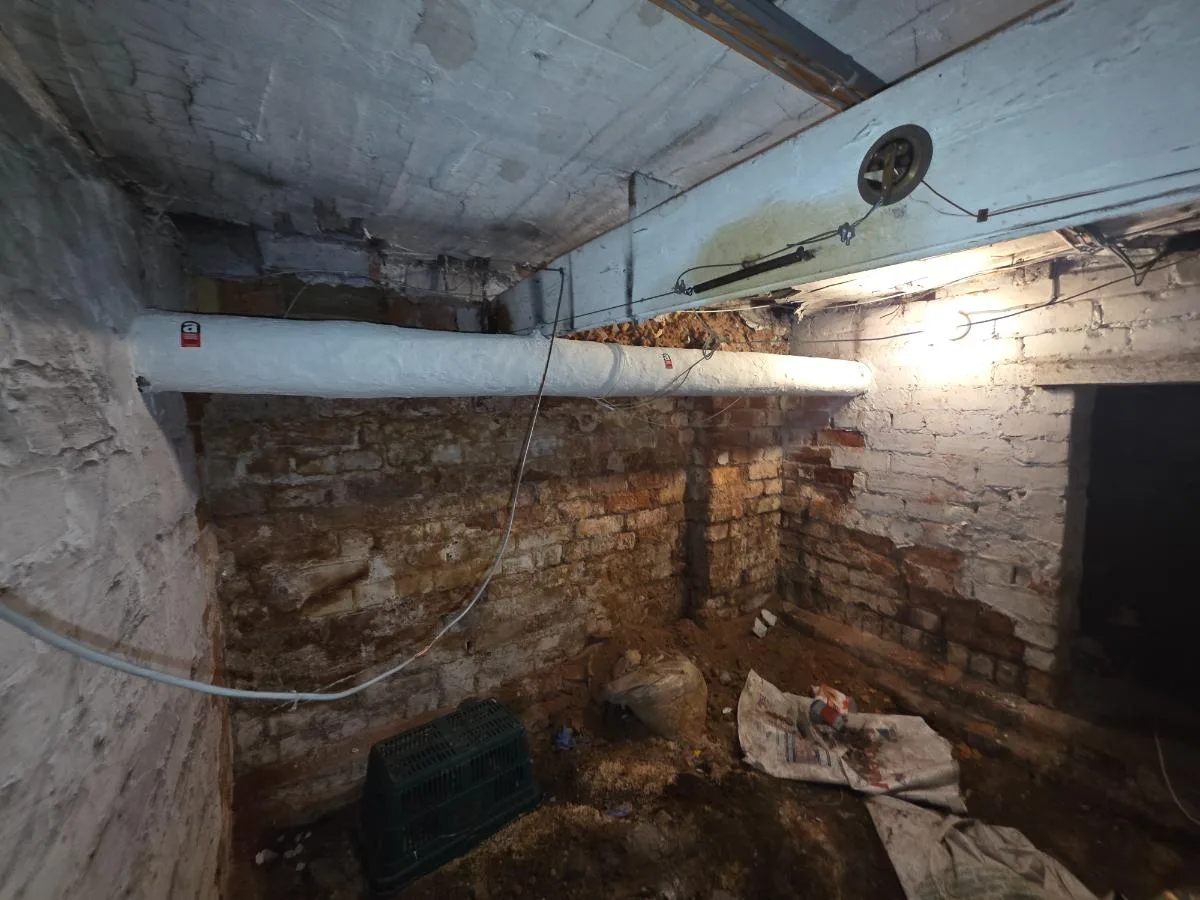
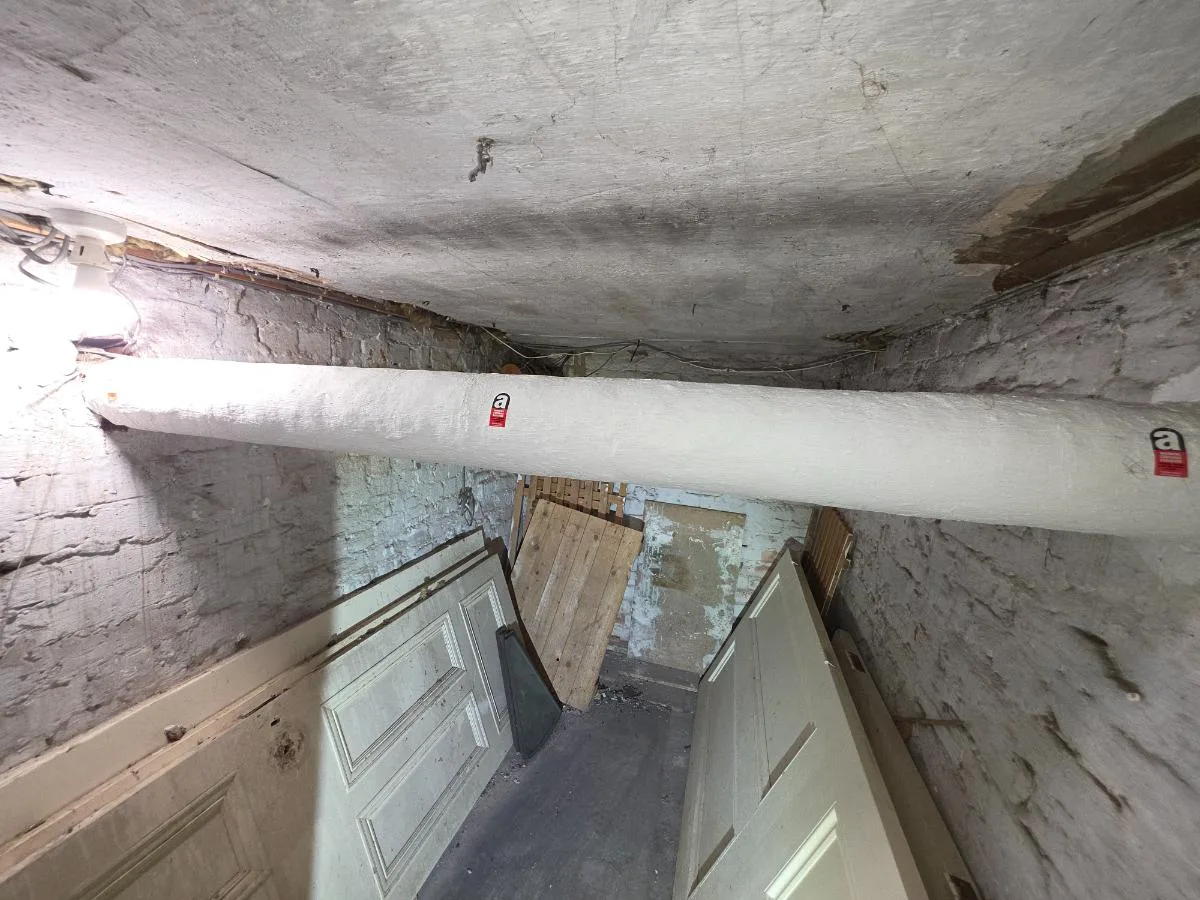
Licensed removal of asbestos pipe insulation (lagging) — a higher-risk material — under a controlled enclosure with negative pressure and air monitoring. Waste consignment-noted and the area independently cleared before handback.
As a higher-risk licensed material, the insulation was removed inside a sealed enclosure under negative pressure with continuous air monitoring, HSE notification handled end to end, and independent clearance certification before handback.
If you need licensed asbestos removal or asbestos removal in Salford, Innov8 UK Group covers the whole of the UK from bases in Manchester, Carlisle and London — surveyed properly, quoted fixed and documented fully.
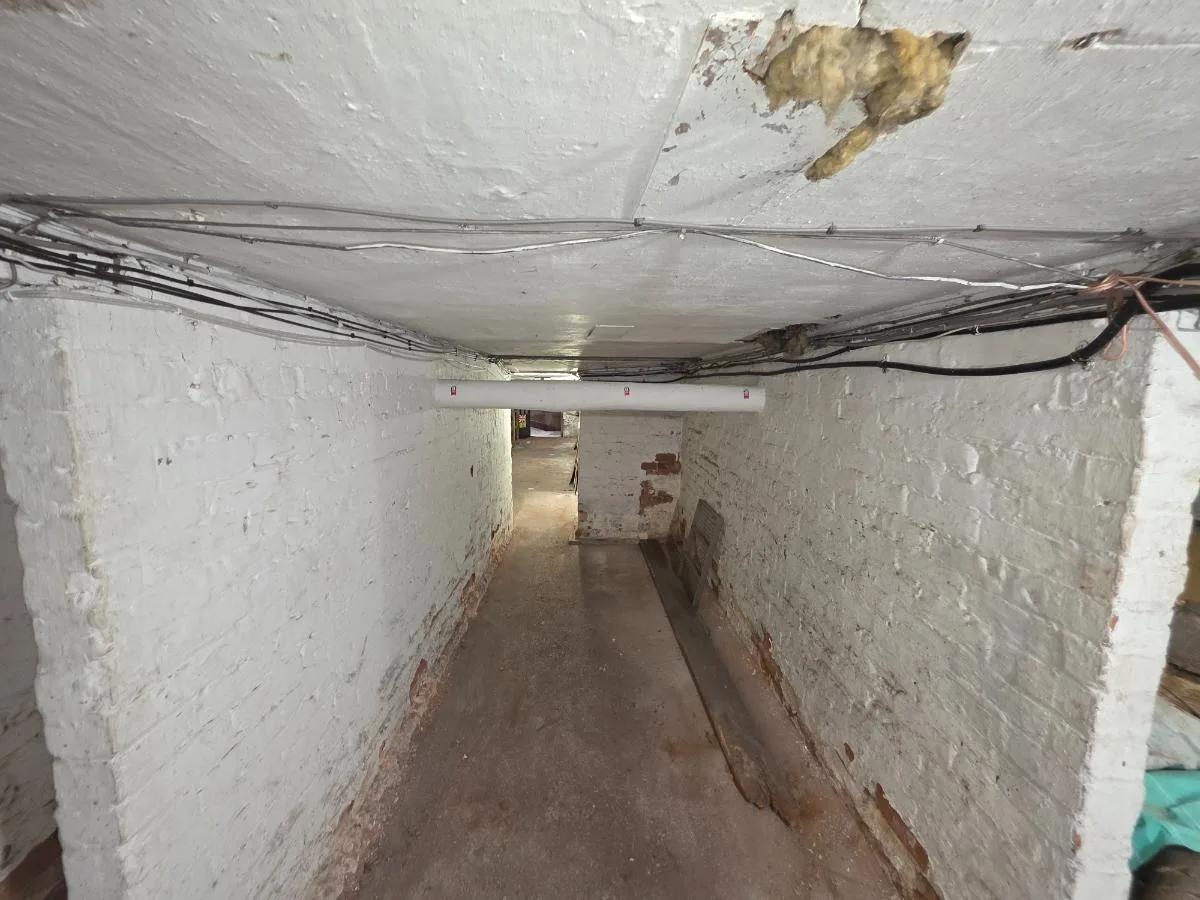
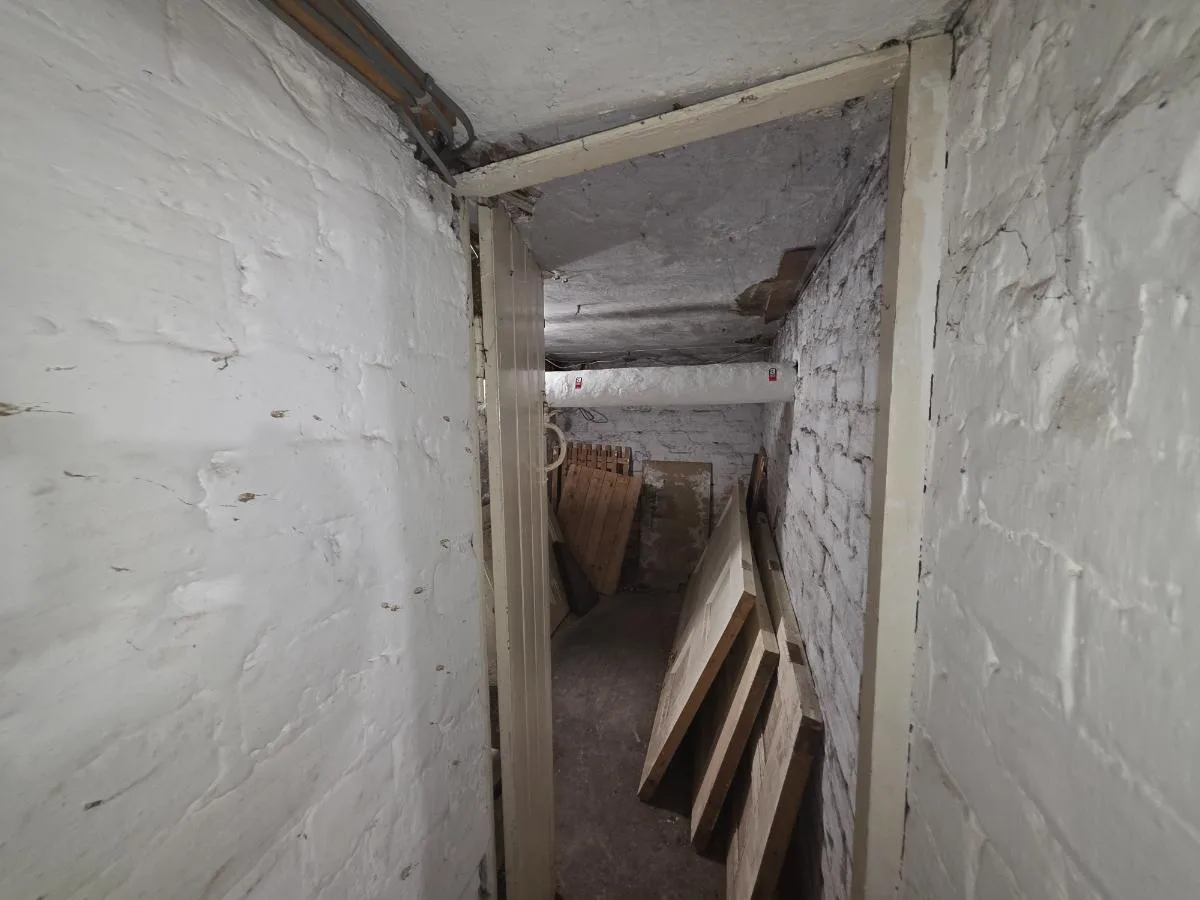
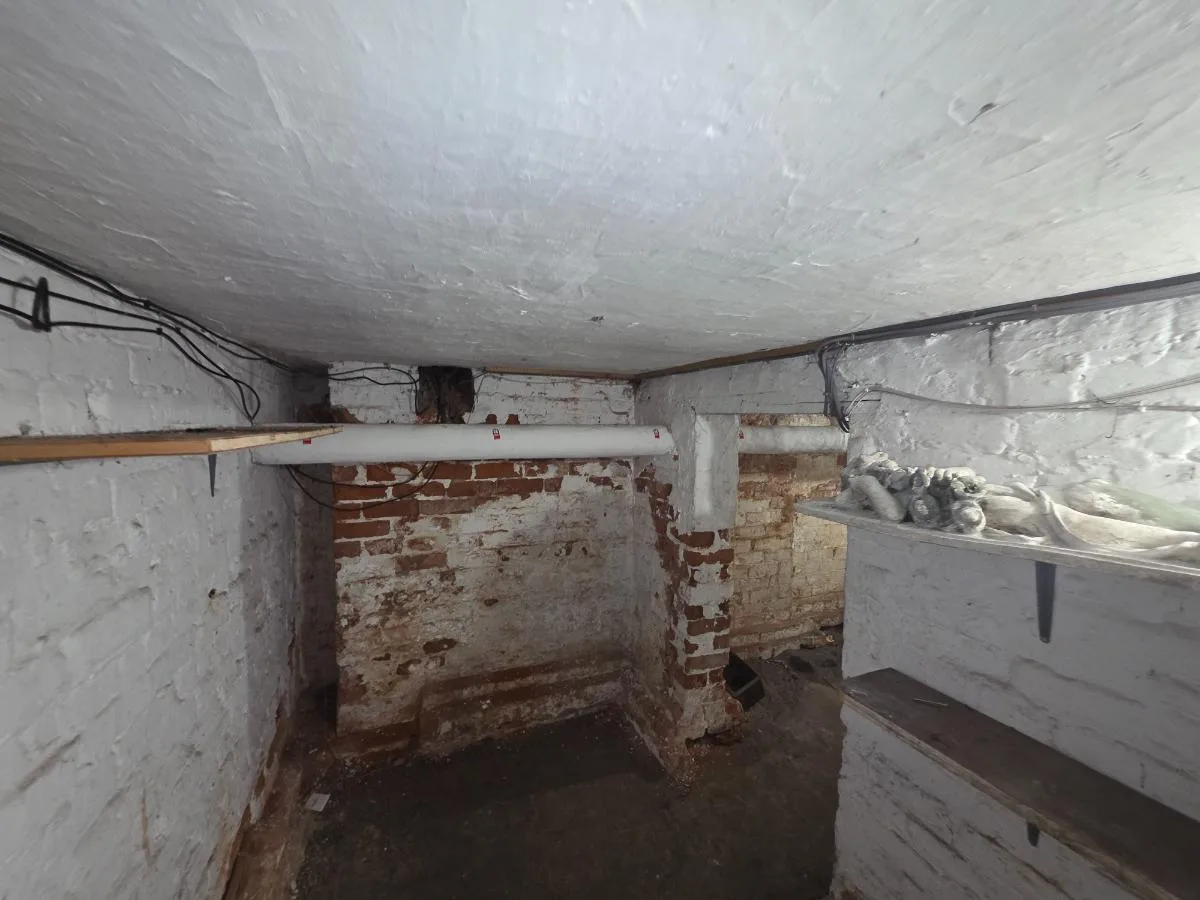
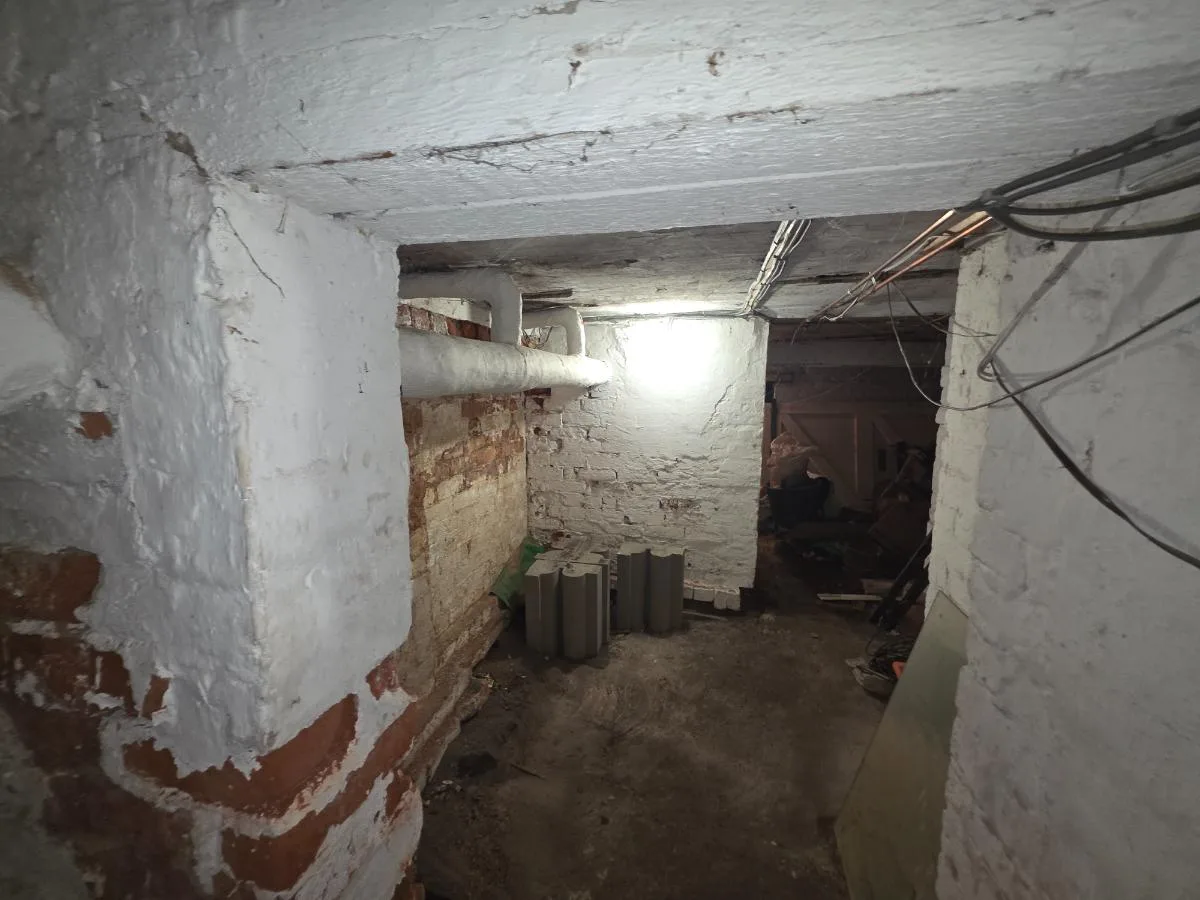
A site visit was carried out on the agreed date at Gloucester Road, Salford (M6 8PP) following the findings of asbestos survey report BA 5046, issued by the client The survey, originally completed on the the agreed date, identified Amosite (brown asbestos) and Chrysotile (white asbestos) within pipe lagging and associated debris beneath the dining room floorboards, with evidence of the material extending into the living room area. The lagging was noted to be in poor condition, dry and friable, with debris present on wiring, cobwebs, and flooring within the void. The material was classified as high risk (Risk Priority 1) and requires licensed removal.
The proposed works involved establishing a fully sealed asbestos enclosure with negative pressure ventilation achieving at least eight air changes per hour in line with HSG247 requirements. A dedicated Decontamination Unit (DCU) was provided for all personnel entering and exiting the work area. Approximately 10 linear metres of asbestos pipe lagging and associated debris were carefully removed, followed by a full environmental clean of the affected voids beneath both the dining and living rooms. The works were completed under controlled conditions, with a four-stage clearance process carried out by an independent UKAS-accredited analyst prior to reoccupation.
The asbestos risk was controlled by licensed removal within a sealed enclosure, using NPUs, DCUs, RPE/PPE, wet removal, and a four-stage clearance with UKAS analyst. Non-asbestos risks such as electrical hazards, confined spaces, manual handling, noise, and slips were managed through isolation, safe systems of work, and welfare controls.
OBSTRUCTIONS MAKING ACCESS AND THE WORKS MORE DIFFICULT Access to the asbestos lagging is restricted by floorboards, confined void spaces, and existing wiring. Limited headroom, poor lighting, and fragile surfaces increase difficulty. These obstructions require careful planning, controlled access, and additional time for safe removal, making the works more complex compar