

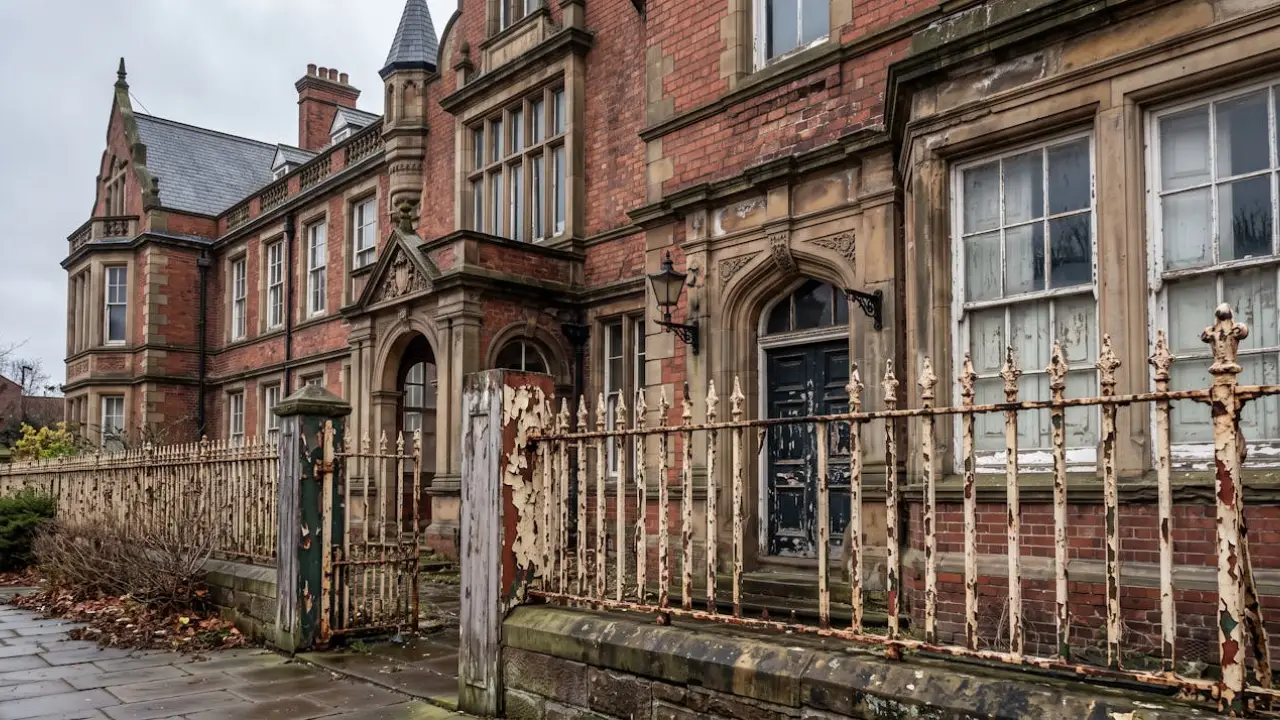
Lead paint was used across UK buildings well into living memory: schools, hospitals, civic buildings, industrial steelwork, and Victorian and Edwardian housing. Unlike asbestos it is still perfectly legal in situ. It becomes a problem the moment somebody sands, burns, blasts or strips it.
The framing is the same one we use for asbestos. Intact and stable is usually fine. Disturbance is the danger.
The other hazard in pre-1992 buildings
On refurbishment jobs lead and asbestos are very often in the same room, sometimes on the same substrate. Treating them as two separate contracts with two contractors and two sets of paperwork is exactly what creates the gap where something gets disturbed by the wrong trade. We hold both capabilities in one team.
The law: CLAW 2002
The Control of Lead at Work Regulations 2002 place the duty on the employer. In plain terms: assess whether work is liable to expose anyone to lead; prevent exposure where you can and control it where you cannot; provide suitable respiratory protective equipment and washing and changing facilities; and where exposure is significant, put employees under medical surveillance with biological monitoring of blood lead levels.
There is no licensing regime and no notification period as there is for licensed asbestos work, which is precisely why standards vary so much between contractors. The regulations still apply in full.
Survey and testing first
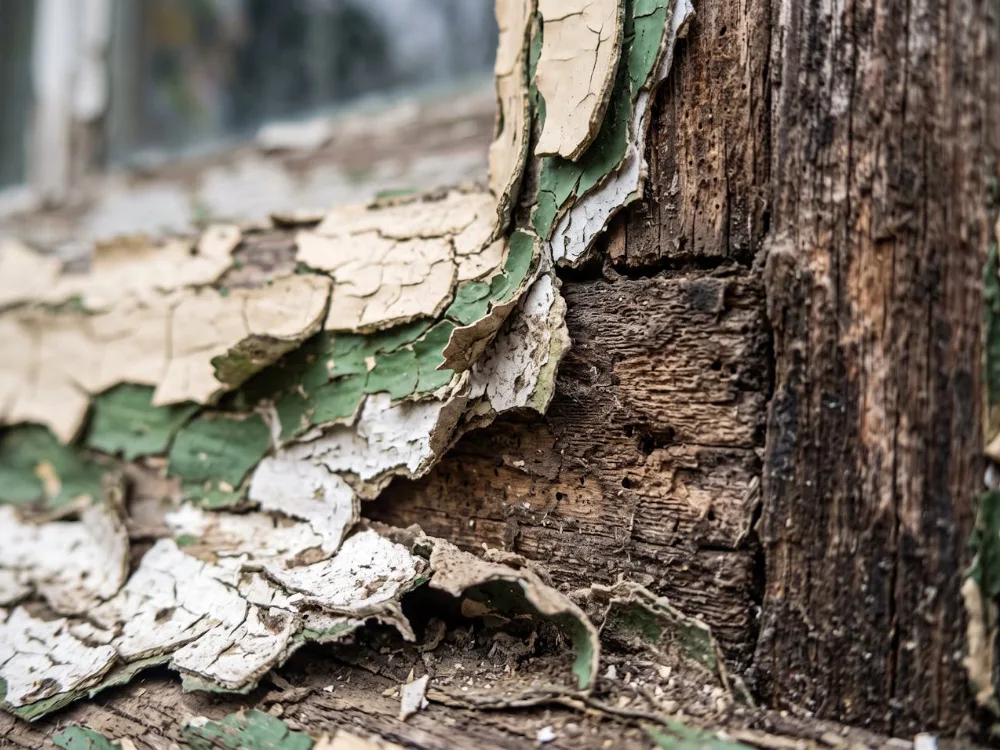
A lead paint survey takes representative samples of the paint layers by location and substrate — timber, plaster, steel, render — because the same building often has different histories on different surfaces. Samples go for laboratory analysis, and the report tells you which surfaces need controlled removal and which can be safely encapsulated or overcoated.
XRF and laboratory paint-chip analysis answer different questions. XRF is fast, non-destructive and good for screening a lot of surfaces to find where the lead is. Laboratory analysis quantifies a specific surface properly and is what you want behind a removal specification. We will say which one the job needs.
Controlled removal — how we work
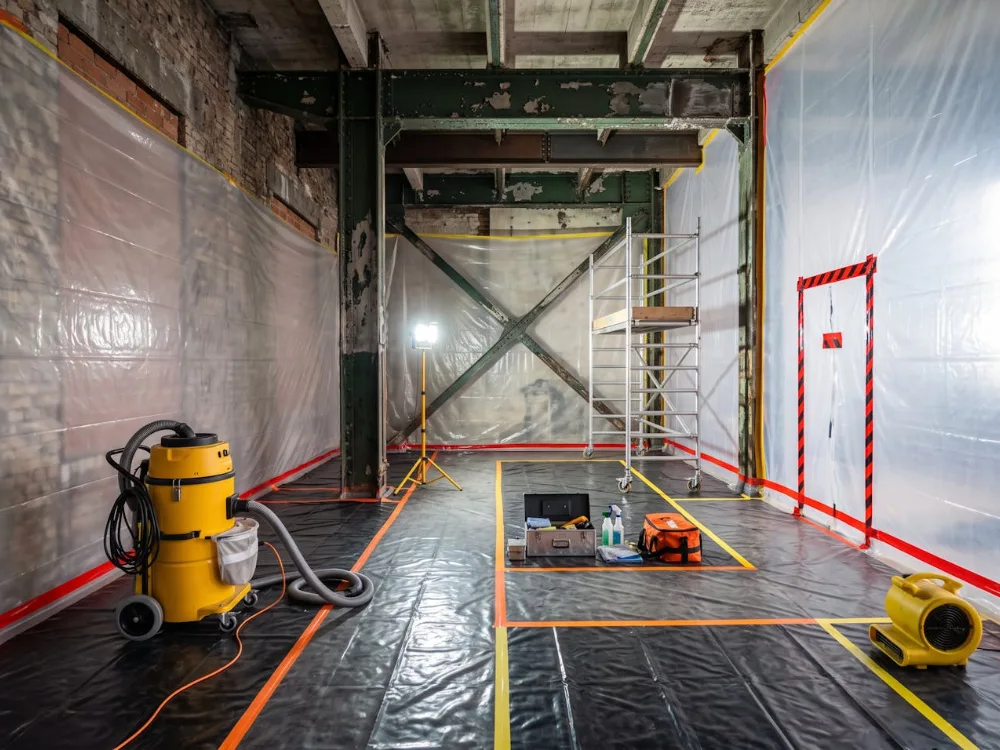
Sheeted containment around the work area. Stripping methods chosen to avoid generating fume or fine dust rather than whichever is quickest. HEPA filtration and HEPA vacuums throughout. Decontamination arrangements for operatives, and housekeeping treated as part of the work rather than a tidy-up at the end. Waste is handled under our Environment Agency waste carrier registration CBDU525609.
Our lead paint project at Bredbury is a worked example: a three-day lead paint removal and encapsulation carried out under CLAW controls, with an airlock decontamination chamber and HEPA vacuums.
Where we find it
- Window frames, doors, skirtings and staircases in older housing and schools.
- Structural steelwork, gantries and plant in industrial buildings.
- Railings, gates, external joinery and rainwater goods.
- Heritage and listed buildings, where stripping is constrained by conservation requirements.
- Radiators and pipework runs.
Removal or encapsulation?
Sometimes the right answer is to leave it and seal it. Encapsulation works where the paint is sound and well-adhered, where the substrate is stable, and where the surface is not going to be subject to abrasion, impact or heat. It is often the better answer in heritage buildings, where taking the paint back to bare timber does more harm than good.
It does not work where the paint is already flaking, where the substrate is wet or moving, on surfaces that will be drilled or cut later, or where the intended works require bare material. The logic mirrors asbestos encapsulation: encapsulation is a management decision that has to be recorded and revisited, not a way of making the problem disappear.
One contractor, several hazards
Asbestos, lead paint, mould remediation, mercury and contaminated land are handled by one HSE-licensed team, so a refurbishment does not need four suppliers and four sets of paperwork. See our full range of services, land remediation and commercial asbestos removal. We work regularly with schools and academies and housing associations, where occupied-building constraints shape the programme as much as the technical work does.
Frequently asked questions
How do I know if paint contains lead?
You cannot tell by looking at it. The only reliable answers come from testing: an XRF instrument gives a reading through the paint layers on site, and paint-chip samples sent to a laboratory give a quantified result for a specific surface. Age is a strong indicator rather than proof, so on any pre-1992 building the safe assumption is that lead is present until testing says otherwise.
Is lead paint dangerous if I leave it alone?
Intact, sound, well-adhered lead paint is generally not a significant risk. The hazard is created when it is disturbed: sanding, burning off, blasting, scraping, power tool use, or paint that has begun to flake and shed dust. Deteriorating paint in an occupied building is the case where doing nothing stops being an option.
When was lead paint banned in the UK?
There is no single ban date. Lead in domestic decorative paint was progressively restricted through the 1980s and had effectively been phased out by 1992. Industrial and specialist coatings followed a different path, and some remained available longer. In practice, treat any building painted before the early 1990s as potentially containing lead.
Do I need a licence to remove lead paint?
No. There is no equivalent of the asbestos licensing regime for lead. That does not mean it is unregulated: the Control of Lead at Work Regulations 2002 apply in full, which means assessment, prevention or control of exposure, RPE, washing facilities, and medical surveillance and biological monitoring where exposure is significant.
Can lead paint be removed while a building is occupied?
Often yes, working in sheeted containment with HEPA filtration and controlled stripping methods, area by area, with the rest of the building continuing to operate. It depends on the substrate, the removal method and the occupancy. Schools and care settings are usually programmed into holidays or quiet periods regardless.
What does a lead paint survey cost?
It depends on how many surfaces and substrates need representative sampling and whether on-site XRF, laboratory analysis or both are appropriate. We will tell you which the job actually needs rather than selling both, and we give a fixed written quote within 24 hours.