

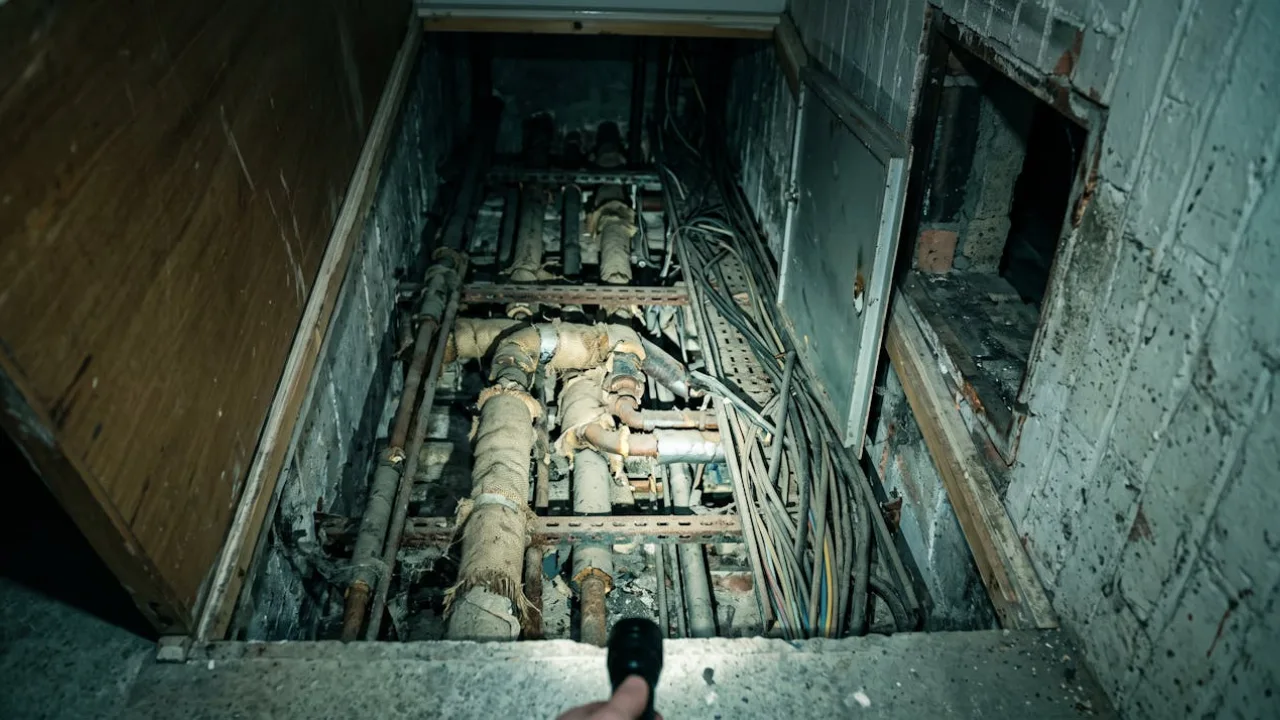
The honest answer is that it depends on your lease, and that is precisely why the question causes so much trouble. Landlord and tenant each assume the other holds it. The managing agent assumes it sits with whoever instructed the last survey. The register ends up being nobody’s job, and nobody notices until a contractor puts a drill through something.
What CAR 2012 says about the duty-holder

Regulation 4 of the Control of Asbestos Regulations 2012 places the duty to manage on whoever has responsibility for the maintenance and repair of non-domestic premises, by virtue of a contract or tenancy. Where no such contract or tenancy exists, it falls on whoever has control of the premises. The regulations do not name a job title. They follow the repairing obligation.
The standard patterns, stated as typical positions rather than legal advice:
- Full repairing and insuring lease — the repairing obligation sits with the tenant, so the duty to manage usually does too.
- Multi-let building — the landlord holds the structure and common parts; each tenant holds their own demise.
- Managing agent — holds the duty only where the management agreement actually says so. Being the party who commissions surveys is not the same as being the duty-holder.
- Owner-occupier — no ambiguity. It is you.
Your lease governs. If the repairs clause is ambiguous, get it checked before you assume it is somebody else’s problem.
The common-parts trap
In residential blocks the flats are domestic premises and sit outside the duty to manage. The common parts do not. Stairwells, corridors, lift motor rooms, tank and plant rooms, risers, roof voids and external walkways are non-domestic for these purposes, and they are exactly where asbestos insulating board, lagging and sprayed coatings tend to be.
Managing agents and resident management companies miss this regularly, usually because the building reads as residential from the front door.
Where responsibility bites in practice
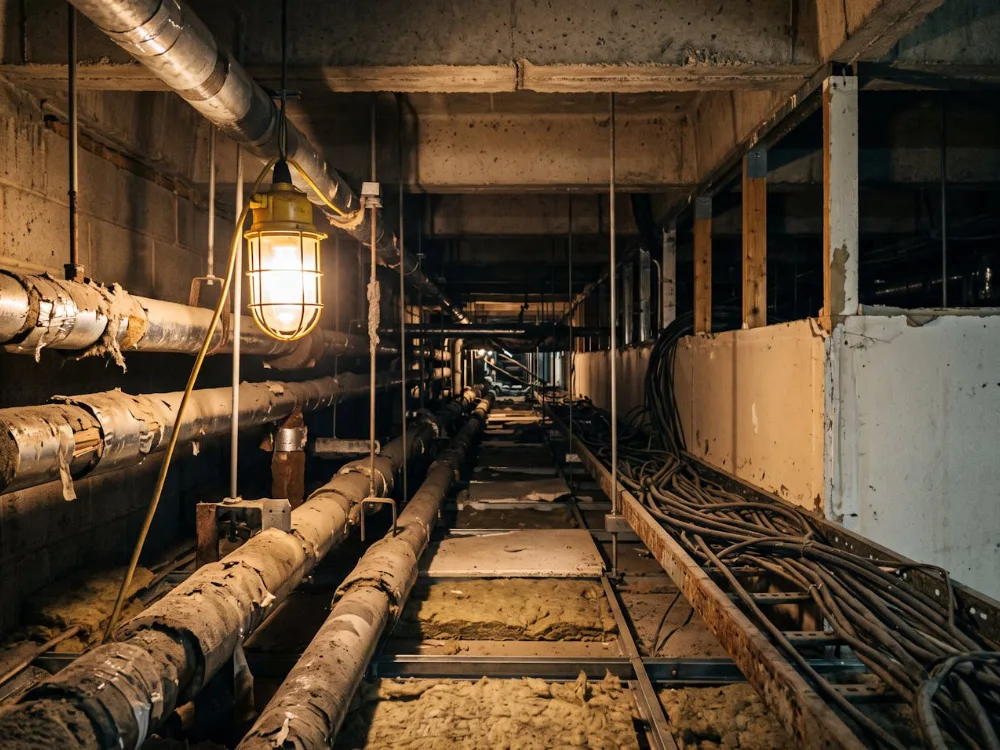
The duty stops being abstract the moment a contractor drills a wall, lifts a ceiling tile or opens a riser. Regulation 4 requires the information to be given to the person liable to disturb the material. Not held. Not available on request. Given.
A register locked in a managing agent’s office serves nobody standing on a ladder with a drill. Our guide to the duty to manage asbestos sets out what that obligation involves.
The four failure patterns we see
- No register at all — usually a building that changed hands and the file did not follow it.
- A register nobody updates — accurate in 2016, silent about the three refurbishments since.
- A register nobody hands over — complete, current, and never once shown to a contractor.
- A survey of the wrong type for the work — a management survey used to price and plan a strip-out, which is how materials get found the hard way.
How to settle it in an afternoon
- Read the repairs clause in the lease and write down who carries the repairing obligation.
- Write down who physically holds the asbestos register and where it lives.
- Confirm the date it was last reviewed and when the next re-inspection is due.
- Test the chain: if a contractor arrived tomorrow morning, who would show him the register, and how?
If any of those four answers is unclear, that is what an audit is for. Our CAR 2012 compliance audits check all eleven points of the chain and tell you where it breaks.
Frequently asked questions
Who does the Control of Asbestos Regulations 2012 apply to?
The duty to manage in Regulation 4 applies to whoever has responsibility for the maintenance and repair of non-domestic premises, whether by virtue of a contract or a tenancy. Where there is no such contract or tenancy, it applies to whoever has control of the premises. Separate duties under the same regulations apply to every employer whose work could expose anyone to asbestos, and to the contractors carrying out that work.
Is the landlord or the tenant responsible for asbestos?
It depends on the lease. Under a full repairing and insuring lease the repairing obligation usually sits with the tenant, which usually puts the duty to manage there too. In a multi-let building the landlord typically holds the common parts and structure while each tenant holds their own demise. These are typical positions rather than rules: your lease governs, and if the repairs clause is ambiguous, get it checked.
Who is responsible for preventing exposure to asbestos at work?
Every employer is responsible for preventing the exposure of their own employees, and of anyone else affected by their work. That duty is not transferable by contract. A duty-holder providing the register does not discharge the contractor’s duty, and a contractor being careful does not discharge the duty-holder’s obligation to provide the information.
Does the duty to manage apply to residential buildings?
Individual dwellings are domestic premises and fall outside the duty to manage. The common parts of a residential building do not: stairwells, corridors, lift motor rooms, plant rooms, risers, roof voids and external walkways are non-domestic for these purposes. Managing agents and resident management companies routinely miss this.
What must a duty-holder actually do?
Take reasonable steps to find out whether asbestos-containing materials are present and what condition they are in; presume materials contain asbestos unless there is strong evidence otherwise; record the findings and keep the record up to date; assess the risk and prepare a written plan for managing it; review that plan; and give the information to anyone liable to disturb the material.
For the practical next steps, see asbestos management plans and asbestos surveys.