

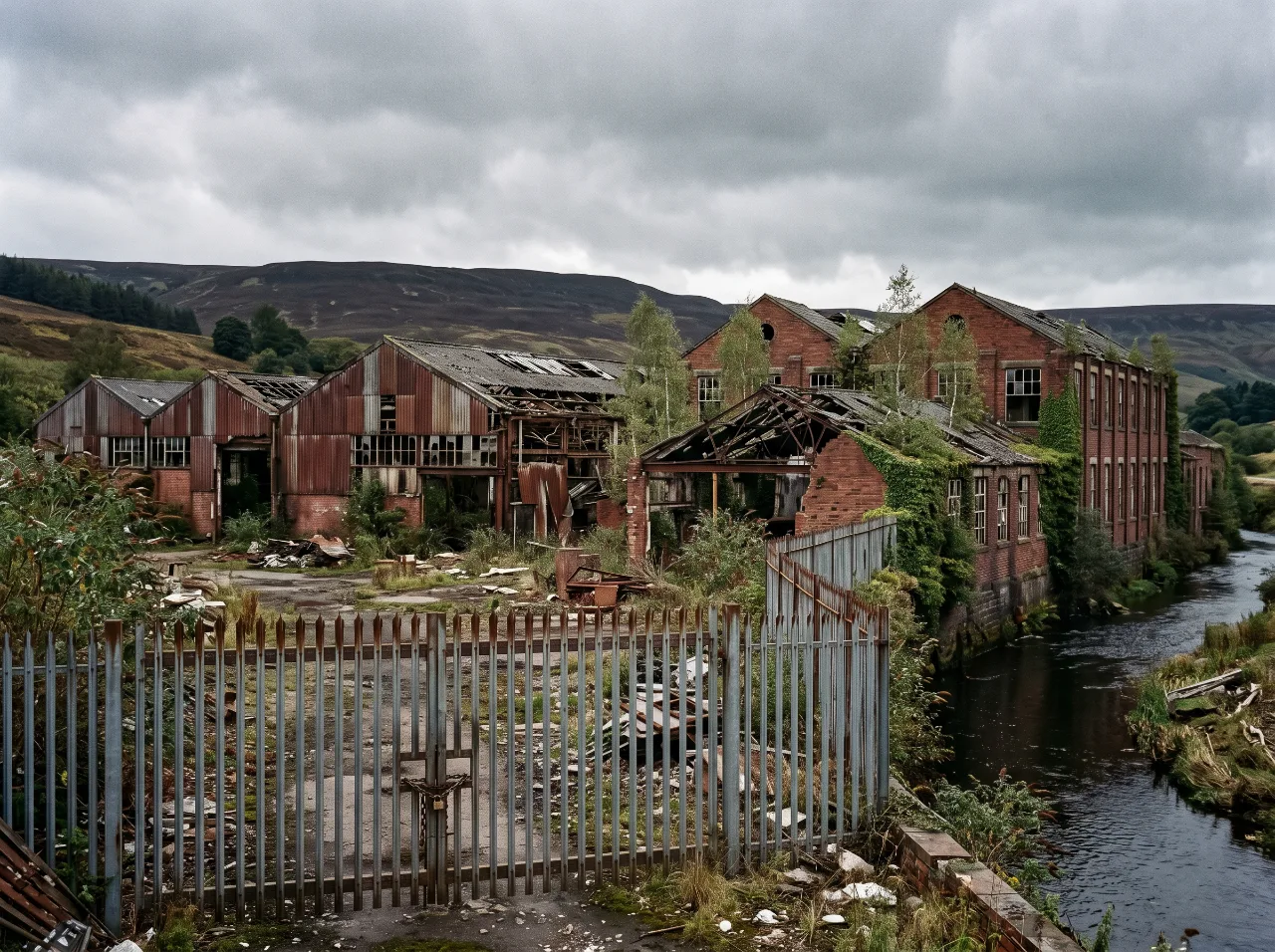
Twenty-five years after production stopped, something is finally happening at the former Turner Brothers Asbestos factory in Spotland, Rochdale.
Spodden Park Ltd, which took control of the roughly 75-acre site off Spod Road from ESG Trading in 2024, announced in October that it had signed an agreement with a remediation contractor for the clean-up. On 3 November it said a specialist contractor would spend "the next few weeks" carrying out investigation works across the site to find where asbestos is buried and understand the ground conditions, so that the safest remediation strategy can be chosen before any clean-up starts.
The company has been careful about what the investigation is not. In its words, "no asbestos will be disturbed and no buildings or structures will be demolished". Heavy machinery will be on site and some concrete may need breaking, which the company says does not contain asbestos. Vegetation along Rooley Moor Road was scheduled for clearance in October.
Spodden Park has not published its plans for the site. It is understood to be considering housing and a park, with far fewer homes than the 650 proposed in the 2000s.
Why this site matters
Asbestos products were made on the site from 1879. By the 1970s the works was turning out more than two million yards of asbestos cloth and more than five million miles of asbestos yarn a year, and it is routinely described as the largest asbestos textile factory in the world. Nellie Kershaw, a 33-year-old Turner's worker, became the first officially recognised asbestosis death in 1924. Turner & Newall's UK business went into administration in October 2001 and the asbestos-producing areas were demolished the same year.
Everything since then has been about what is still in the ground. The 2004 application for 650 homes claimed an "absence of any asbestos contamination"; HSE rubble tests in 2005 found up to one per cent asbestos in three of eight samples, a council-commissioned report in 2006 concluded that "the presence of asbestos cannot be ruled out across much of the site", and the application was refused in 2011. A second scheme fell in 2021 after a £500,000 contamination investigation was never completed. Meanwhile the site has become a magnet for trespassers: security was called more than 100 times in October 2025 alone, with 30 to 60 breaches a month and children seen playing in the River Spodden.
What a ground investigation involves
We are not involved in the Spodden Valley work and this is not a commentary on the contractor. But the job described is one we do on brownfield sites across the North West, so here is what "mapping buried asbestos" actually means on the ground.
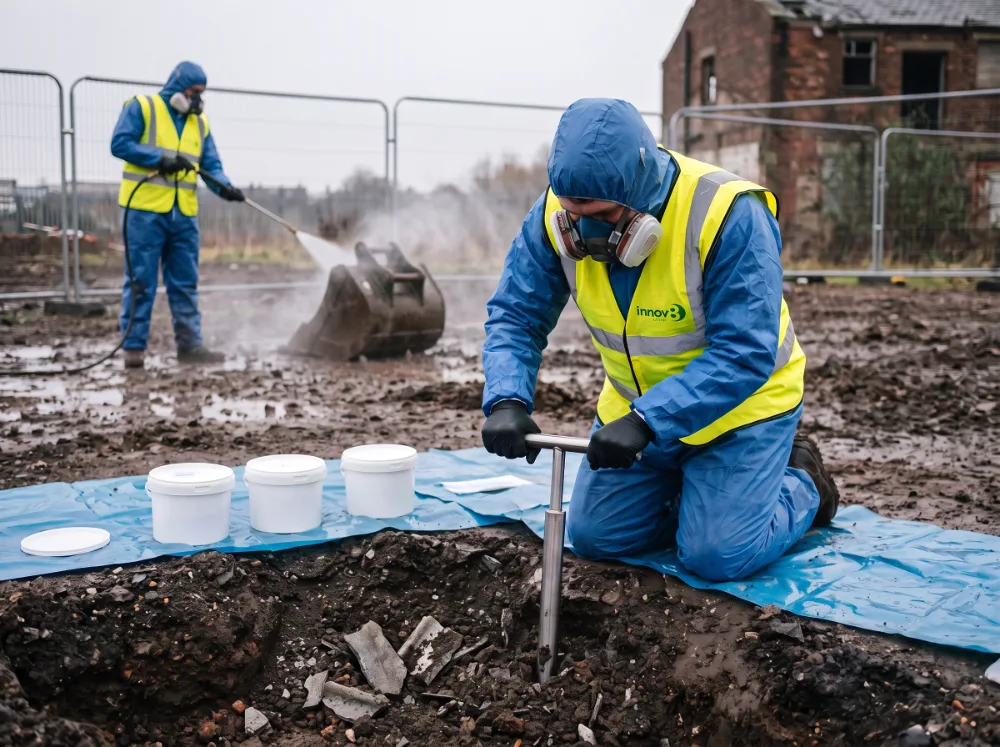
A site like this is investigated on a grid. Trial pits and boreholes are opened at set intervals and at every location where the history (old plans, aerial photographs, the 2005 and 2006 reports) says waste is likely. Soil is sampled at depth intervals using a sampling tube, sealed in tubs and sent to a UKAS-accredited laboratory, which reports not just whether asbestos is present but which type, what form it is in (fibre bundles, cement fragments, loose fibre) and how much by weight. The investigation also has to look at the buildings still standing, the made ground beneath hardstanding, and the river bank.
The reason the "nothing disturbed" promise matters is airborne fibre. Investigation work on a site known to contain amosite is itself work with asbestos under CAR 2012, so it is planned with dust suppression, controlled excavation, personal and perimeter air monitoring, decontamination and licensed disposal of every sample and spoil arising. The industry framework for this is the CL:AIRE CAR-SOIL guidance, which interprets the regulations for asbestos in soil and construction materials.
What comes out of the investigation is a quantified picture: where the asbestos is, how deep, in what concentration, and therefore what the options are. Removal to licensed landfill under consignment note is one; a validated cover system that seals contaminated material in place is another; most large sites end up with both. The choice is driven by the data, the end use and the cost, which is why the investigation has to come first.
What it means for landowners and developers
If you own or are buying a former industrial site anywhere in Greater Manchester or Lancashire, the Rochdale story is the cautionary tale: a desk study that says "no asbestos" is not a ground investigation, and a refused application twenty years on is the cost of skipping one. Done properly, a phased investigation, a remediation strategy and a verification report are what make a contaminated site financeable and developable, and the clean-up cost may qualify for Land Remediation Relief.
Innov8 is HSE-licensed (242606081) and a registered waste carrier (CBDU525609). We investigate, remove and dispose of asbestos in soils and made ground, including on sites with standing structures. Read more about asbestos in soil and our land remediation service, or see our Rochdale page.