info@innov8-group.co.uk Ring us: 0333 335 6375
Not sure which service you need? Ask us
REQUEST A CALL BACK
innov8 Group
01About 02Services 03Costs 04Projects 05News 06Locations 07Contact INSTANT QUOTE
GUIDES · CONTAMINATED LAND

Japanese Knotweed in Soil: Rhizomes and Site Management.

Japanese knotweed can affect development plans because excavation and movement of affected soil may spread viable plant material. A site needs a management approach that considers the plant, its underground growth and the planned works, rather than treating it as ordinary vegetation clearance.
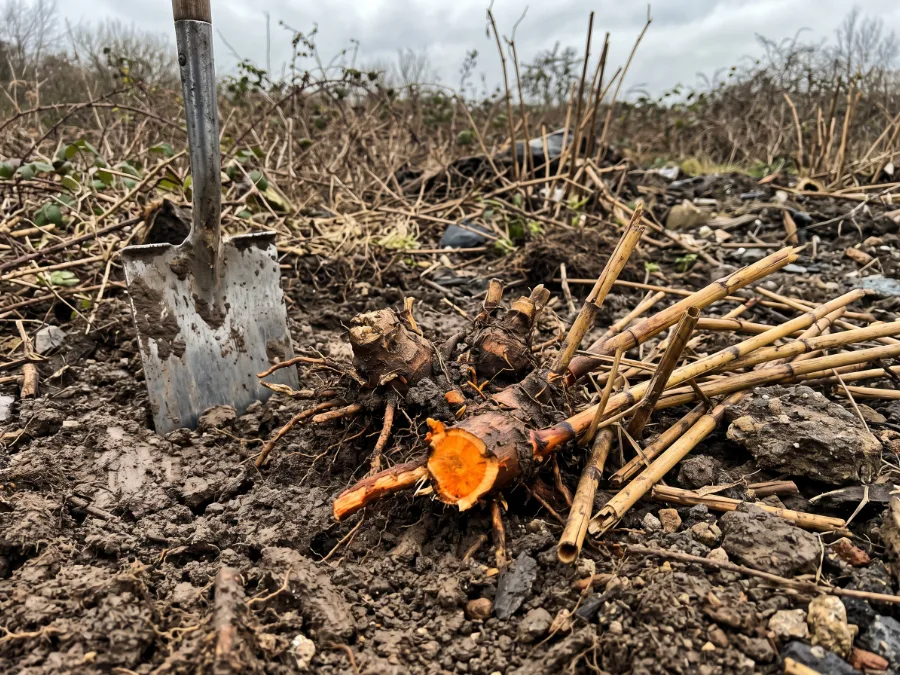
Orange-cored rhizome crowns exposed in disturbed ground beside a spade

Why knotweed rhizomes matter

Rhizomes are underground stems from which knotweed can regrow. Small viable pieces can be moved in soil or on equipment, so clearing visible stems does not establish that the ground is free of the plant. Below-ground growth also needs consideration when planning excavation, storage and movement of material.

Identifying Japanese knotweed in disturbed ground

Visible plants and suspected rhizomes should be assessed by someone competent in identification. Photographs can help an initial discussion, but a picture of an orange-coloured root does not establish species, viability or the full affected area. Do not excavate suspected roots simply to obtain a photograph or test your own identification.

What to do before groundworks

Mark the suspected area and prevent unplanned disturbance or movement of its soil. Arrange an assessment of the vegetation, affected ground and proposed works. The management plan should explain responsibilities, access, equipment cleaning, soil handling and the records needed to track material.
Finding knotweed in one area does not mean the entire site requires excavation. Conversely, removing visible growth is not evidence that every below-ground fragment has been removed.
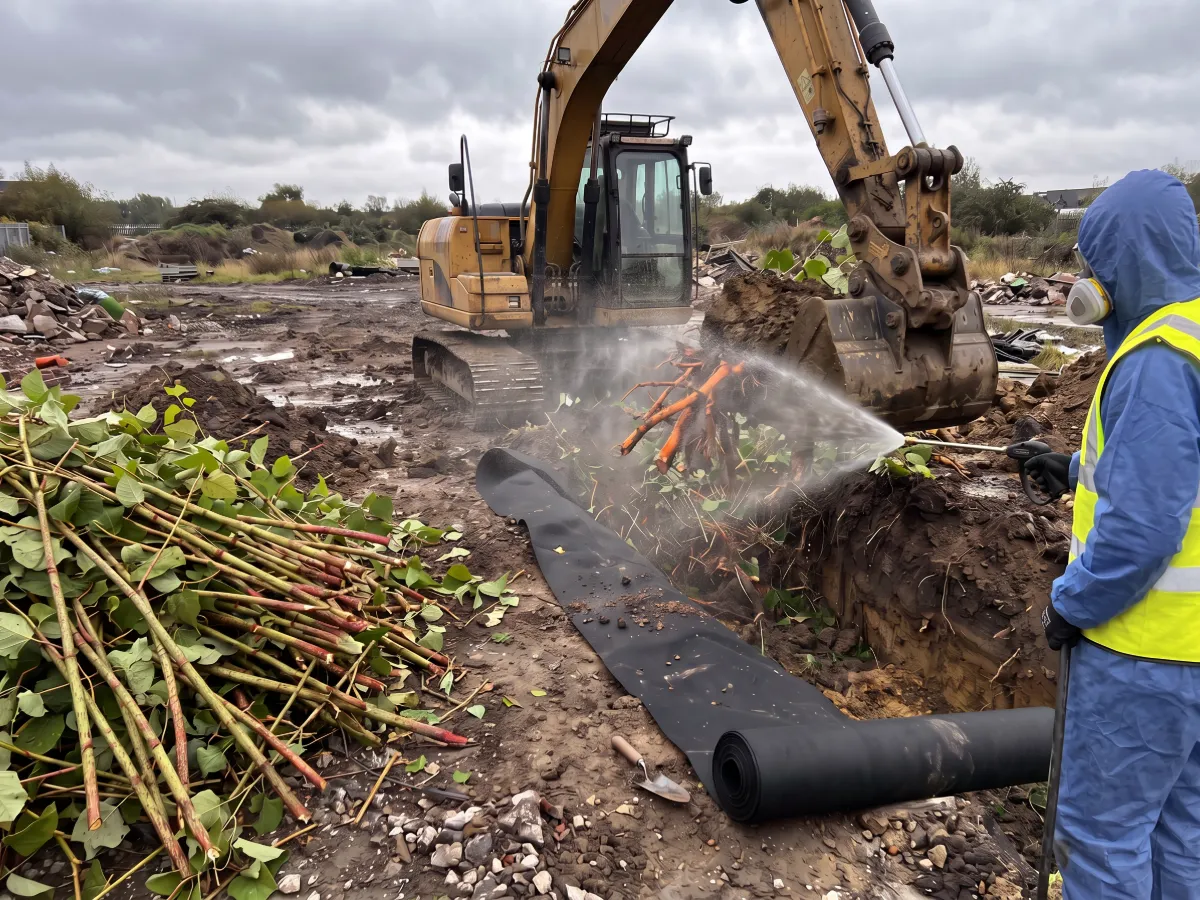
Excavation in disturbed ground with a membrane being laid along the edge

Treatment, excavation and affected-soil management

Management options depend on the site, the available time and the development proposal. They may include an appropriate treatment programme or controlled excavation under a defined plan. No method should be described as an instant guaranteed cure without evidence of its suitability and the follow-up required.
Where treatment involves herbicides, applicable product rules, competence requirements and any restrictions near water must be checked. This guide does not provide instructions for chemical application or on-site burial.

Moving soil containing Japanese knotweed

In England, discarded knotweed material and affected soil can be controlled waste. Before it leaves site, establish the correct classification, carrier requirements and a receiving facility authorised to accept it. Knotweed in soil does not automatically make that soil chemically hazardous; other contamination still needs separate assessment.
Do not put affected material into an ordinary soil load or green-waste stream without confirming a lawful route. Requirements and regulator guidance differ across England, Wales, Scotland and Northern Ireland and must be checked for the site concerned.

Knotweed alongside other contamination

Brownfield sites may also contain asbestos in soil or heavy metals and industrial fill. Assess those issues separately: a knotweed management plan is not a chemical contamination assessment, and the chosen soil route must account for everything present.
Related
Land remediation service →Asbestos in soil →Heavy metals in soil →
FURTHER READING
How to stop Japanese knotweed from spreading (GOV.UK, England) ↗How to stop invasive non-native plants from spreading (GOV.UK) ↗

Discuss your site requirements

Send us the site location and proposed works, together with any identification report, management plan or treatment record. We will discuss the scope and identify where specialist assessment is needed.
DISCUSS YOUR SITE
QUESTIONS

Questions about knotweed-affected soil

Does no visible knotweed mean the soil is clear?
No. Above-ground growth can be absent or obscured while underground plant material remains. The site history and assessment matter.
Can affected soil be reused elsewhere on site?
Do not assume it can. Any proposal needs a suitable management plan and the applicable regulatory requirements checked before movement or reuse.

Not sure which
service you need?

Send a photo for initial advice
ASK US or call 0333 335 6375
CONTACT US

Talk to a specialist today

CALL US NOW
0333 335 6375
Mon to Fri 8am to 6pm · Emergencies day & night
Tap to call →
EMAIL US
info@innov8-group.co.uk
Attach photos for a faster quote
Send an email →
CALL BACK
We ring you back the same working day
Leave your number, we do the chasing
Arrange a call →
QUOTATION FORM
Quotation usually within 24 hours for straightforward enquiries
Send the details and photos
Start your quote →
Innov8 Group
HSE-licensed asbestos removal and environmental contractor. Surveys, removal, demolition, remediation and hazardous waste — one team, one responsibility. North West based, working UK-wide.
Follow us on social media
PAGES
About usServicesCostsProjectsNewsLocationsAccreditationsFAQsSurvey analyserContact
SECTORS
HomeownersLandlordsHousing associationsSchoolsHealthcareMain contractorsIndustrialRetail & officesPublic sectorDevelopers & land remediation
CONTACT
0333 335 6375 info@innov8-group.co.uk Unit 7, Wilsons Business Park Centre, Manchester M40 8WN
website by pixelmonster
5-star rated by our customers
5-star rated on Trustpilot reviews
5-star rated on Yell business reviews
Verified reviews across the web
Trustindex© 2026 Innov8 UK Group Ltd. All rights reserved. Privacy Cookies
website by pixelmonster