

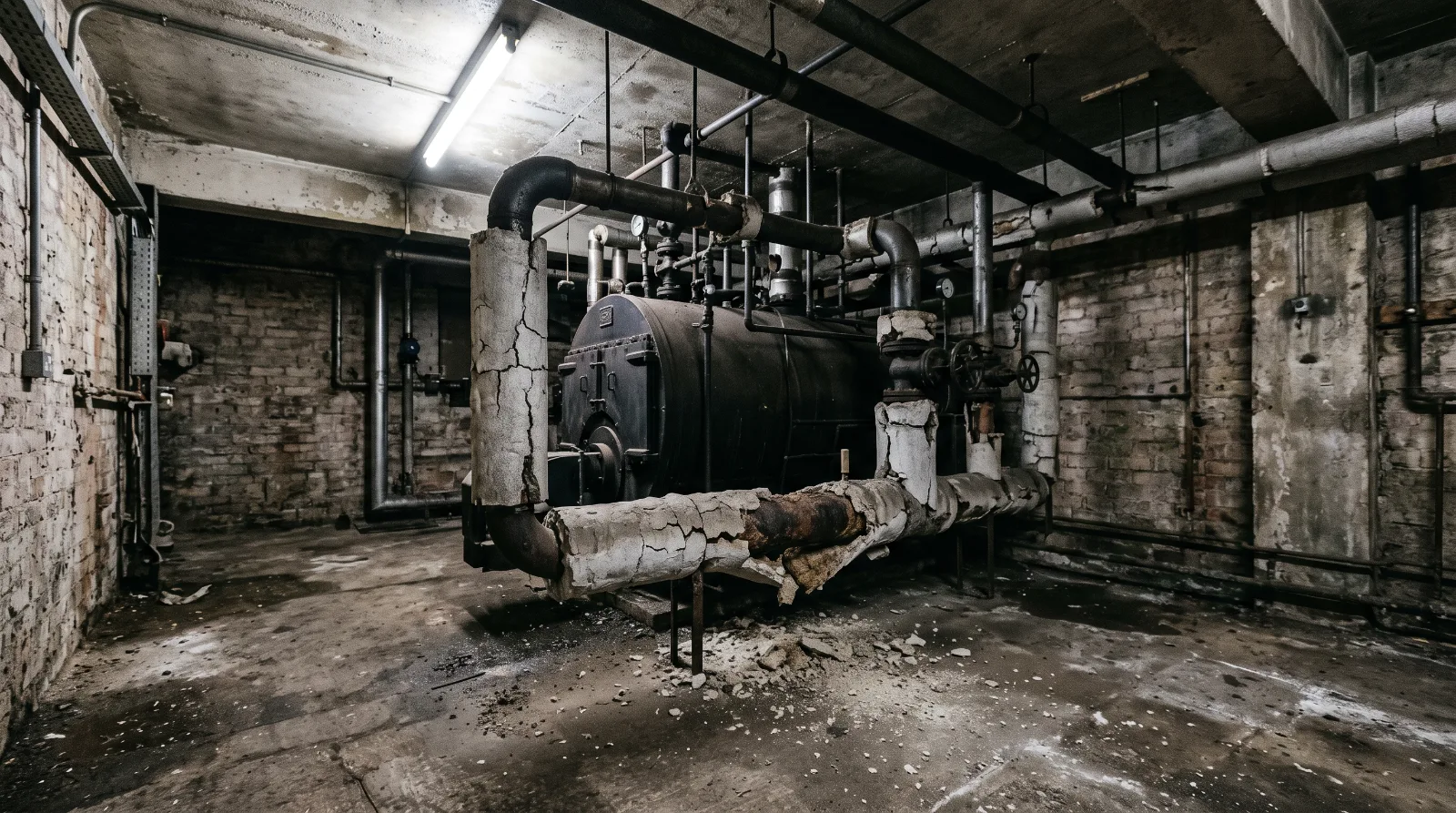
Every year the same call comes in around the middle of October. The heating has gone on for the first time since spring, something has started knocking or weeping in the plant room, and a maintenance engineer has gone to look at it. Then someone notices the white, fibrous material wrapped around the pipe, and the job stops.
That material is the reason pipe lagging sits at the top of the asbestos risk list. Thermal insulation on pipework and boilers was often amosite or crocidolite — brown and blue asbestos — at a far higher fibre concentration than the cement sheets or floor tiles most people picture. Damaged lagging in a warm, moving-air plant room releases fibres continuously, not just when someone touches it. That is why it is licensed work: an enclosure, negative pressure, full decontamination and a four-stage clearance before anyone goes back in.
What to check before you turn the system on
Walk the plant room with a torch while the system is still cold and look for:
- White or grey moulded sections around bends, valves and flanges — often the last lagging left when the straight runs were replaced
- Any lagging that is cracked, crushed, water-stained or has been patched with tape or a bandage
- Debris on the floor underneath pipework, especially fine grey dust in the corners and on cable trays
- Gaps where pipes pass through walls, where lagging was cut back and never made good
- Anything that has been disturbed by a previous trade and left open
If you find damage, do not clean it up. Sweeping and vacuuming with the wrong machine turns a contained problem into a spread one. Close the room, restrict the keys, and get it identified.
The bit that costs people money
Plant rooms almost never appear properly in a management survey, because a management survey does not open up. If your only asbestos information came from a management survey, the lagging behind the boiler casing and above the false ceiling was probably recorded as “presumed” and never looked at again. Before a heating replacement or a boiler swap, that becomes a refurbishment and demolition survey — intrusive, and specific to the area being worked on.
Planning the work for the shoulder season is worth real money. Once you are into December, taking a plant room out of service for an enclosure means temporary heating, and the cost of that usually exceeds the removal itself.