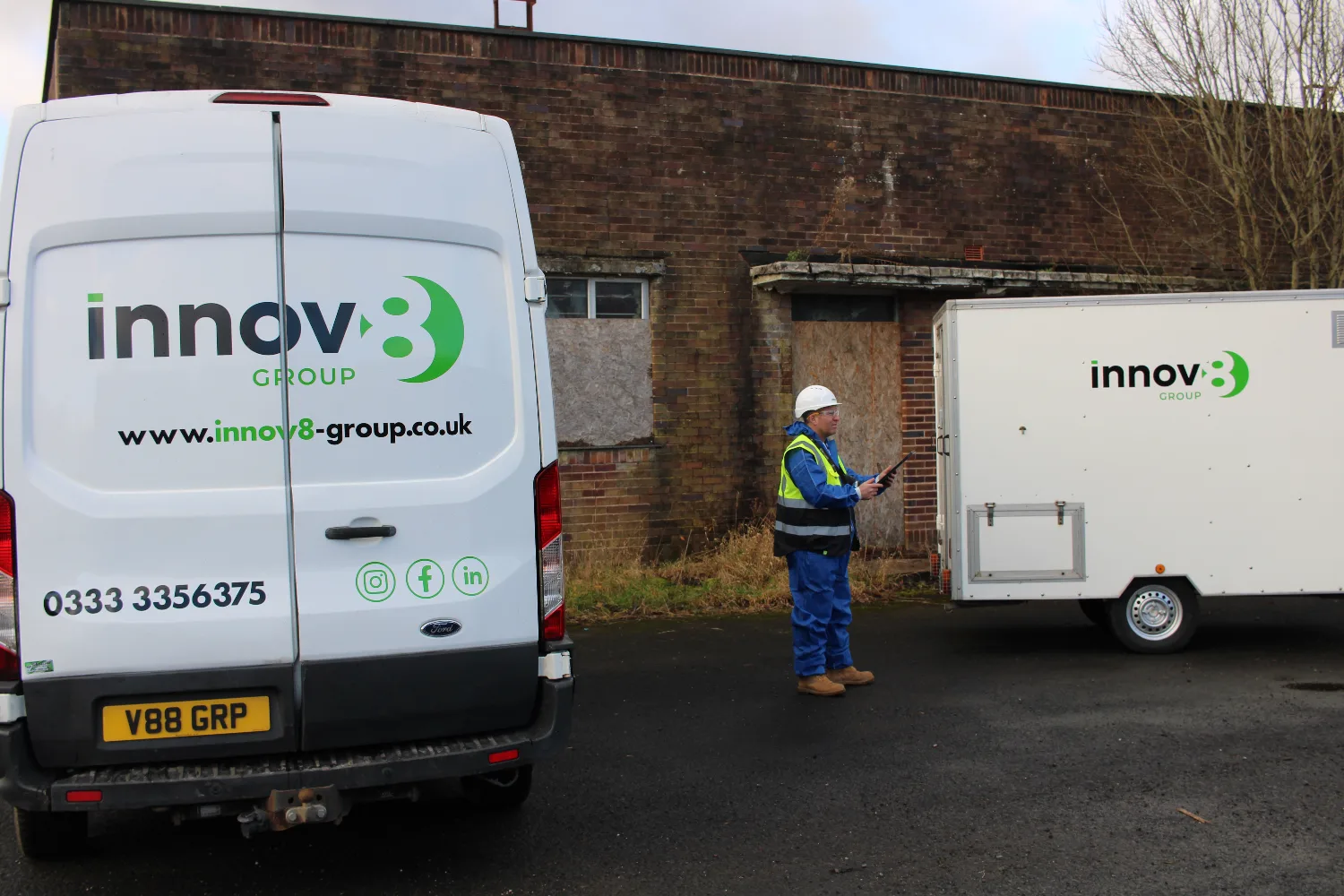
One of the most common questions we are asked is deceptively simple: does my asbestos job need a licensed contractor? The answer depends on which of three categories the work falls into under the Control of Asbestos Regulations 2012 (CAR 2012). Getting this right is a legal duty — and it protects everyone involved.
This is the highest-risk category, covering the removal of asbestos insulating board (AIB), sprayed coatings and thermal insulation (lagging). Only an HSE-licensed contractor can carry out this work, and in most cases it must be notified to the HSE at least 14 days beforehand. It requires enclosures, negative pressure, decontamination units, air monitoring and independent clearance. The Network Rail relay rooms, care homes and school boiler rooms we worked on across 2025 all fell into this category.
Some non-licensed tasks still carry enough risk that they must be notified to the HSE, with records of the work kept and health surveillance provided for operatives — but they do not require a full licence. NNLW typically involves higher-risk work on materials that are more than slightly damaged, or where the work will disturb the material significantly.
Lower-risk materials in good condition — such as asbestos cement sheets, and some textured coatings and floor tiles — can often be removed as non-licensed work, provided it is short-duration and properly controlled. Our large commercial floor and coating removal in Bath in 2025 is an example: still delivered with wet-strip methods, dust extraction and controlled waste disposal, but not licensable.
As a duty holder, commissioning the wrong type of contractor for the work is a compliance failure with real consequences. The safest route is always to arrange an asbestos survey first, then ask a licensed contractor to advise which category applies. Innov8 UK Group carries out all three types of work and will tell you what your job requires — no more, no less.